
NEWS
FEEDING BOTTLES AND BIG MEN: WHY EMOTIONAL POPULISM CANNOT REPLACE DEMOCRATIC SUBSTANCE IN ABIA NORTH

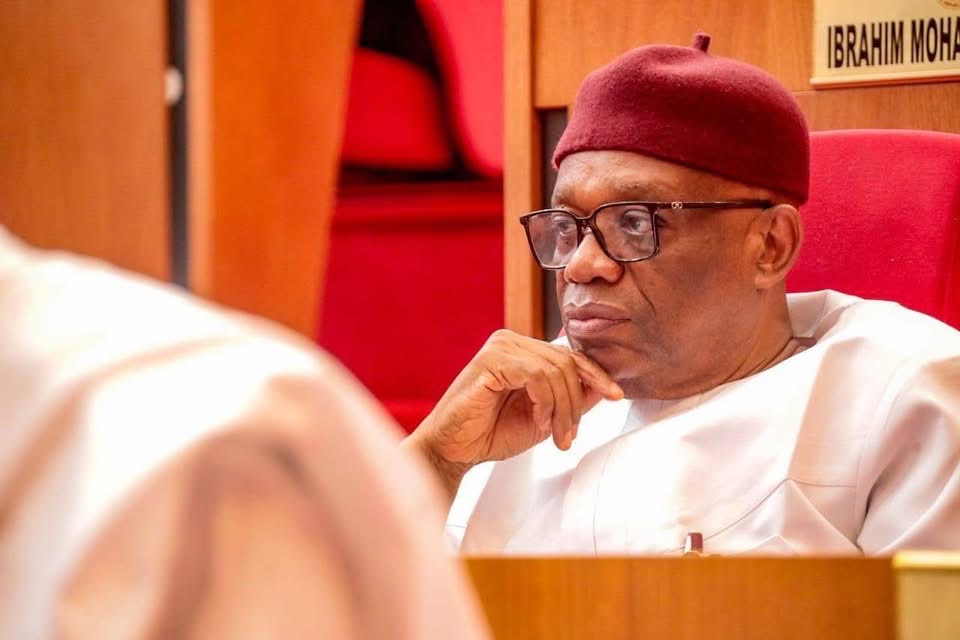
By Hon. Ikechi Anya
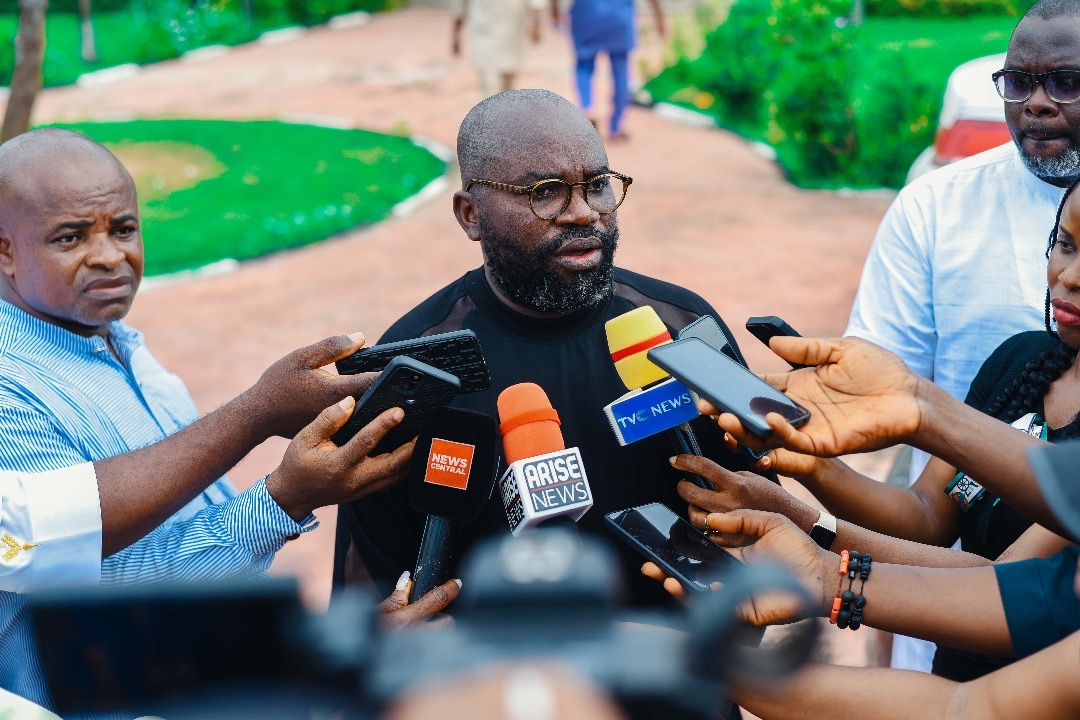
Politics, at its noblest, is the marketplace of ideas—robust, sometimes uncomfortable, but ultimately guided by reason, character, and service. What we have witnessed in recent days from our beloved billionaire clansman, Chief Dr. Ogba Onuoha Boudex, regrettably represents a stark case of political emotional manipulation. Political theorists describe this pattern as political gaslighting or emotional populism: the use of platitudes, fake empathy, praise-singing, and performative affection to bypass democratic debate and short-circuit critical thinking.
The optics were unsettling. A man of means, pedigree, and age suddenly experimenting with crude flattery and hollow theatrics resembles, quite sadly, an adult insisting on being fed with a bottle. It neither inspires confidence nor signals readiness for serious leadership. Rather than articulate a coherent vision for Abia North, the public was served a spectacle of attention-seeking and gaslighting—an approach that grossly underestimates the intelligence and political maturity of Abia people.
This descent is particularly jarring given Chief Boudex’s prior proximity to power. His time as a caretaker local government chairman remains a subject of public discussion, with persistent allegations—fair or otherwise—of intemperate conduct, profanity, and bullying of local staff. In leadership, perception matters. Authority without restraint erodes trust. Temperament is not a private flaw; it is a public qualification.
As the political season returns, familiar habits have resurfaced. Every Dick and Harry has turned up for duty, and the usual tethering to “big men” for strategic positioning has begun anew. In this environment, Chief Boudex appears to have lined up his tactics and delivered a poorly conceived political salvo. It was neither refreshing nor courageous. It read as the posture of an unpaid mercenary on a bitter errand—ready to profit from any seedy electoral arrangement or systemic party patronage that may present itself.
These tactics are outdated. They belong to a bygone era when noise substituted for substance and theatrics silenced debate. In an ongoing democracy, emotional populism cannot shun democratic discourse. Crocodile tears do not rewrite political reality. In Abia North, such theatrics move no one. The zone stands on solid ground—well represented, confident, and acutely aware of the stakes ahead, especially with the credible possibility of a Senate Presidency being zoned to the Southeast. This is not a season for reckless experimentation.
Chief Boudex has hinted at an interest in vying to “retire” the amiable and indefatigable Senator Orji Uzor Kalu. Frankly, the Orji Uzor Kalu Campaign Organization would welcome such an opportunity. Not out of arrogance, but out of confidence in record, reach, and reality. A direct contest would expose, in the most democratic manner possible, the vast difference between noise and substance, between ambition and capacity. It would likely result in an electoral outcome so decisive that it would permanently discourage the recycling of emotional populism as a serious political strategy in Abia North.
Public perception already paints a troubling contrast: a contender often seen as inaccessible to constituents and louder in advertising philanthropy on social media than in legislative advocacy, versus a senator whose experience, visibility, and national relevance are evident. Publicity is not performance. Noise is not representation.
When compared to Senator Orji Uzor Kalu, the difference in experience stands miles apart—so evident that even the blind can see it. Kalu’s record as a former governor, his legislative maturity, his national networks, and his strategic relevance at the federal level place him far above any current contestant in Abia North. Representation at this level is not about clout-seeking; it is about leverage, continuity, and results.
By contrast, Chief Boudex increasingly fits the profile of an adventurous quadrennial politician—erratic in thought, clumsy in honesty, and driven more by ego than service. Power, in this frame, is not a tool for public good but an accessory for class admission and self-validation. Abia people have seen this script before, and they are no longer entertained by it.
Thankfully, Abia electorates are sophisticated and discerning. They know who fits where—who belongs at the local, state, or national level—and they vote accordingly. They are not swayed by fake love, empty praise, or manufactured outrage. Democracy thrives on debate, not gaslighting; on substance, not sentimentality.
The task before us is clear: to keep the tempo and momentum going until the job is done at the federal level. Abia North must not gamble with its future. Experience matters. Capacity matters. National relevance matters. Senator Orji Uzor Kalu embodies these qualities. Until the mandate is fully fulfilled, Abia North must remain focused, united, and unseduced by the politics of emotional manipulation.
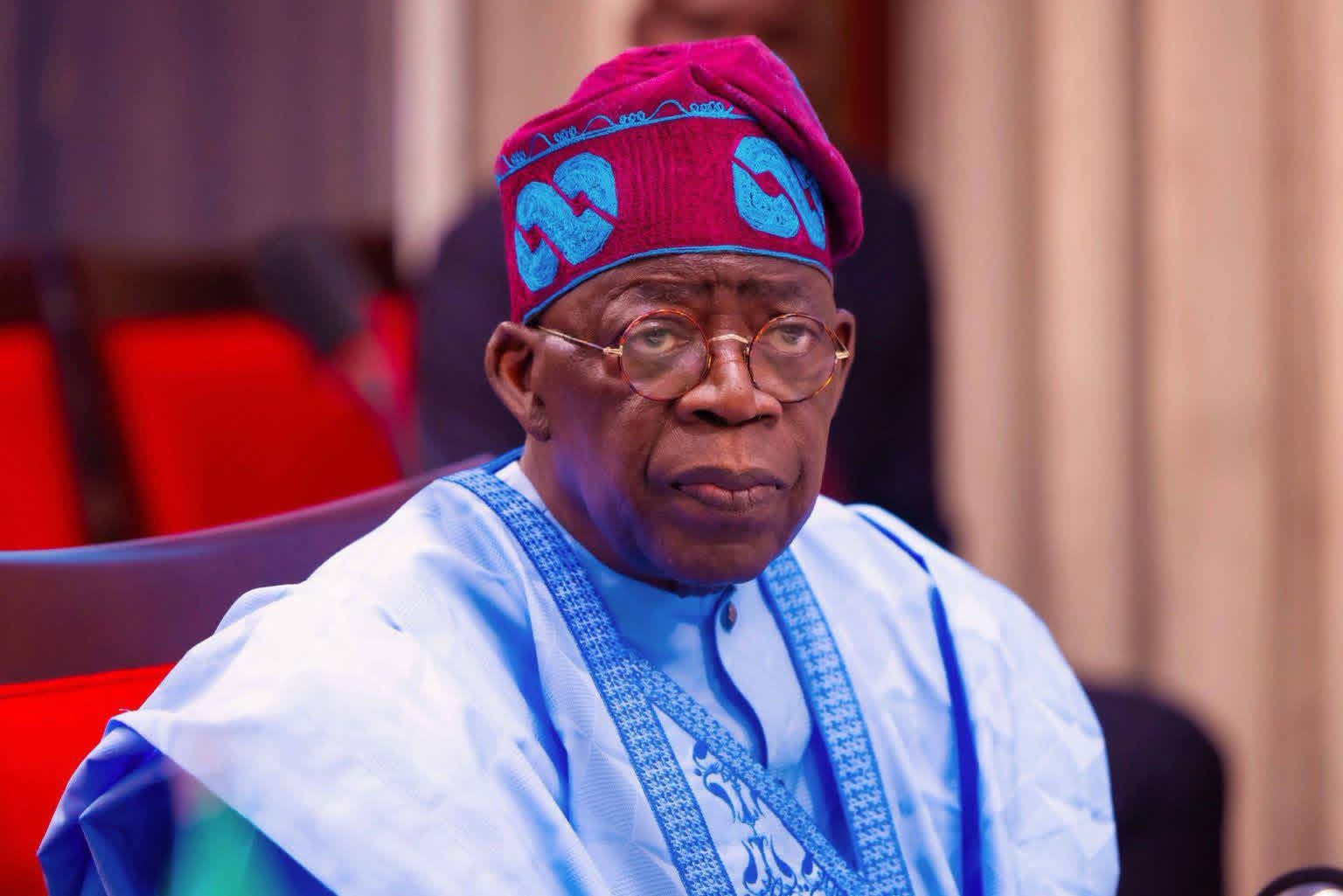
The Presidency has reacted to the ongoing dispute between former Anambra State Governor and presidential candidate of the Nigeria Democratic Congress, Peter Obi, and the state government over the state’s debts and financial liabilities.
Special Adviser to President Bola Tinubu on Information and Strategy, Bayo Onanuga, in a post on X on Wednesday, said Obi had claimed to have left Anambra without debt and challenged him to follow through on his pledge to quit the presidential race if his claim was disproved.
Onanuga wrote, “Peter Obi claimed he left Anambra with a clean slate of debt and even threatened to quit the presidential race if his claims were proven otherwise.”
He added that the Anambra State Government had responded with claims concerning liabilities allegedly left by the former governor’s administration.
Now, the Anambra government has confronted him with facts and figures showing he owed Water Corporation workers, teachers, and pension and gratuities, and had also borrowed for frivolous things,” Onanuga said.
“The ball is back in his court. Will he follow through on his threat by quitting the race?” he asked.
The reaction followed a fresh response by the Anambra State Government to Obi’s Tuesday denial of claims that his administration left behind inherited debts, including a ₦2bn ecological fund, contractor liabilities and unpaid salaries, gratuities and pensions.
Obi had said his administration cleared more than ₦35bn in historical gratuities and arrears and left office without outstanding salary, pension or gratuity obligations.
He also disputed the government’s claim concerning the ecological fund, saying more than ₦2.13bn was left untouched in a First Bank account for the Oko/Umuchiana erosion crisis.
However, in a statement on Wednesday, Anambra State Commissioner for Information and Value Reformation, Law Mefor, disputed Obi’s account, saying the account he identified was an Internally Generated Revenue Consolidated Revenue Account and not an ecological fund account.
Mefor said the government obtained a certified printout of the account and claimed that “from 2011 when the account was opened until date, there has never been any such amount—whether as inflow or balance—in the account.”
Obi had challenged anyone who could establish that his account of the state’s finances was incorrect, saying, “If anybody can establish anything to the contrary, I will stop campaigning.”
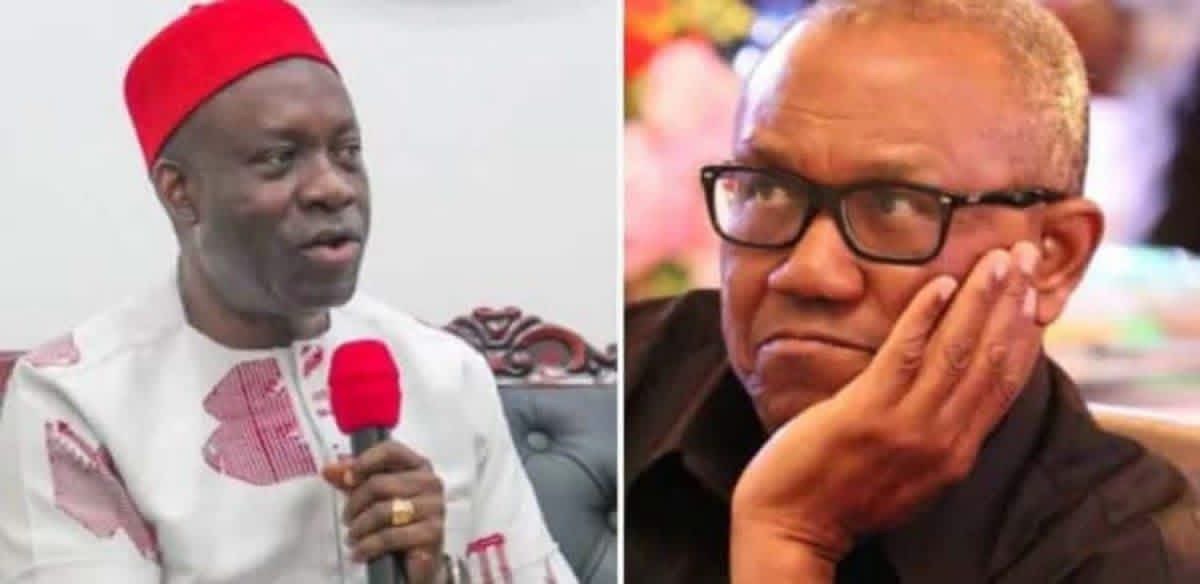
Anambra State Government has accused former governor of the state, Peter Obi, of making false claims about the debt profile and financial records he left behind when he left office in 2014.
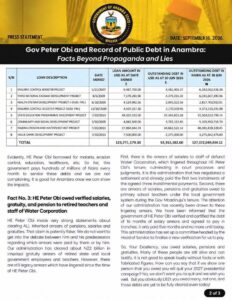
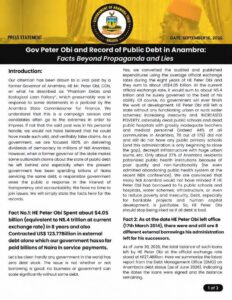
The state government, in a statement by the Commissioner for Information and Value Reformation, Law Mefor, on Wednesday, alleged that eight external loans contracted during Obi’s administration had an outstanding balance of N127.37 billion as of June 30, 2026, while also challenging his claim that he left over N2.13 billion in an ecological fund account.
The statement was issued in response to a recent post by Obi on what he described as “Phantom Debts and Ecological Loan Fallacy”, which the former governor appeared to have made in reaction to comments by the state Commissioner for Finance.
Mefor said the state government considered it necessary to respond because the issues involved public funds and debts that the present administration was still servicing.
He said records from the Debt Management Office (DMO) showed that eight external loans obtained during Obi’s tenure remained outstanding as of June 30, 2026.
The loans, according to the statement, were for the Malaria Control Booster Project, Third National Fadama Development Project, Health System Development Project II, Malaria Control Booster Project (Additional Financing), State Education Programme Investment Project, Community and Social Development Project, Nigeria Erosion and Watershed Management Project, and Value Chain Development Project.
The government said the loans were originally valued at $123.77 million, while $92.35 million remained outstanding as of June 30, 2026, equivalent to N127.37 billion.
The statement said Obi’s administration had contracted the loans for projects covering malaria control, education, healthcare, community development, erosion control and agricultural value-chain development.
The state government said it was not opposed to borrowing where such funds were deployed to bankable projects and human capital development, adding that the current administration had continued to service the debts.
“We are not complaining. It is good for Anambra once we can show the impacts,” the statement quoted the government as saying.
The government also claimed that Obi spent about $4.05 billion during his eight years in office, which it said would amount to about N5.4 trillion when converted at the current official exchange rate.
It, however, acknowledged that governments could not be expected to complete all development projects within their tenure.
The government alleged that despite the expenditure, Obi left the state with challenges in areas including public water supply, education, healthcare, insecurity and infrastructure.
It claimed that 44 per cent of communities in the state, amounting to 78 out of 179 communities, did not have public primary schools, while only about 27 per cent of residents patronised public health institutions.
The state government also accused the former governor of leaving behind unpaid salary, pension and gratuity liabilities.
According to the statement, the current administration had cleared about N22 billion in inherited gratuity arrears owed to retired state and local government employees and teachers.
It, however, said some legacy liabilities dating back to previous administrations remained outstanding.
The government specifically mentioned salary arrears owed to workers of the defunct Water Corporation, saying the current administration had negotiated a settlement and paid the first two instalments of an agreed three-instalment arrangement.
It also alleged that 16 months of salary arrears owed to primary school teachers under the local government system had been verified and certified during Obi’s administration, but that only five months were eventually paid.
The state government said it had constituted a committee headed by the Head of Service to conduct a fresh verification of the outstanding liabilities.
The most contentious issue raised in the statement was Obi’s claim concerning an alleged N2.13 billion balance in a First Bank account at the UNIZIK branch in Awka.
The former governor had reportedly stated that he left more than N2.13 billion in the account when he left office on March 17, 2014, and challenged the state government to prove otherwise.
But Mefor said the government had obtained a certified statement of the account and discovered that it was an internally generated revenue (IGR) consolidated revenue account, rather than an ecological fund account.
He further claimed that the account records showed no inflow or balance corresponding to N2.13 billion from the time the account was opened in 2011 to date.
The commissioner therefore challenged Obi to explain where the money was kept, arguing that the account he cited did not support the claim.
The government also dismissed the N75 billion savings or investment reportedly attributed to the former administration as “phantom”, noting that the claim had been disputed by the previous administration.
Mefor said the state government was responding to the former governor in the interest of transparency and accountability, insisting that it remained focused on delivering development to the people of Anambra.

Akwa Ibom State Government has outlawed the use of ambulances to transport corpses for burial, describing the practice as a public health threat.
Only hearses may now convey bodies for interment, according to the Commissioner for Health, Ekem John.
John made the disclosure on Thursday during the monthly media briefing organised by the Ministry of Information. He was flanked by the Commissioner for Information, Aniekan Umanah, and the Chief Press Secretary to the Governor, Ekerete Udoh.
The commissioner described the measure as one of the most significant reforms in the state’s health sector. He said Governor Umo Eno had institutionalised the Akwa Ibom State Emergency Medical Service Ambulance System, elevating it from policy to a statutory agency.
“Through this law, the state government has now criminalised and outlawed the use of ambulances to carry corpses,” John stated. “In the last one year and six months, under the reforms of His Excellency, Governor Umo Eno, we have returned our ambulance operations to the level found in the Western world.
“You will not find any government ambulance at any burial site. The law is very clear: whether it is a privately owned ambulance, mission ambulance or government ambulance, you cannot carry corpses. Corpses are carried by hearses, and when you use our ambulance to carry corpses, you are creating a public health threat to the rest of the public.”
He warned that any ambulance found transporting a corpse would be impounded, regardless of ownership. “The law now empowers government officials to impound the ambulance. So, let people know that when they go to hire an ambulance for their burial, those ambulances can be intercepted on the road.”
John also revealed that about nine bills had been forwarded to the State House of Assembly for consideration. The proposed legislation covers hospital governance, public health security, HIV prevention, protection and anti-discrimination, and public health standards regulation.
Once the health standards regulatory bill becomes law, he said, the relevant agency would set minimum acceptable standards for all health facilities in the state, requiring hospitals to meet specified obligations before they could operate.
-
 OPINION1 year ago
10 seconds with Wike, reshaped my mindset on the difference between wants and needs – Udensi Bernard
-
 NEWS1 year ago
EFCC Detains Former Governor Tambuwal Over Alleged ₦189bn Fraud
-
 NEWS1 year ago
Gov. Mbah Increases Corps Members’ Allowance to ₦20,000
-
 NEWS1 year ago
Rep. Unyime Idem Unveils ₦1bn Family Business Grant for Constituents
-
 POLITICS1 year ago
Dr. Okezie Ikpeazu: A Voice That Still Inspires – Enyinnaya Appolos
-
 NEWS1 year ago
Appeal Court Orders FRSC to Pay ₦10 Million in Landmark Human Rights Case
-
 NEWS1 year ago
Ikonne to Otti: Fear God, Show Us 51 Schools for ₦54bn, Stop Forcing ₦36k Revenue on Aba Traders
-
NEWS1 year ago
Prince Paul Ikonne Applauds Governor Uzodinma’s Support for Aba State, Criticizes Governor Otti’s Stance