
NEWS
Paul Ikonne: The Quiet Reformer Whose Record Could Reshape Governance in Abia

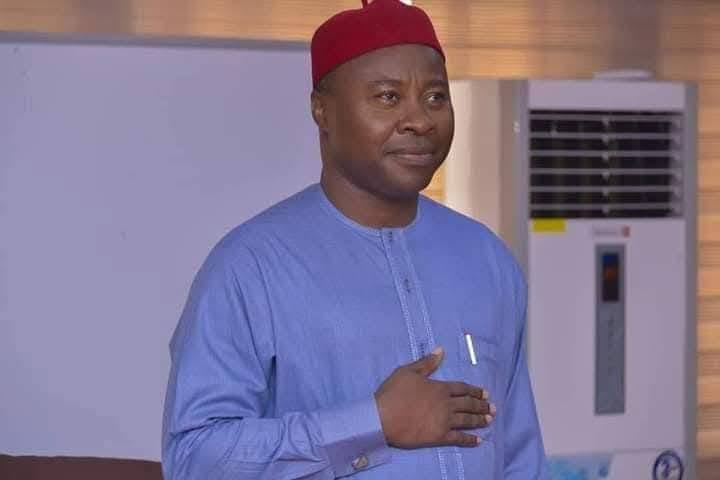
By Ugochukwu Okezie
In a country where public service is often defined by rhetoric, Prince Paul Ikonne has quietly built a career rooted in measurable results. As the former Executive Secretary of the National Agricultural Land Development Authority (NALDA), Ikonne transformed a largely dormant federal agency into a functional driver of youth empowerment, agricultural revitalization, and institutional transparency — all without the drama of political spectacle.
His approach to governance — focused on systems, digital infrastructure, and performance indicators — has earned him quiet credibility among public policy observers. Increasingly, it is prompting a question that is gaining traction in his home state: What could Abia achieve under a leader who has already delivered results nationally?
From the Margins to Federal Impact
Before 2020, NALDA was barely visible on Nigeria’s governance map. Set up in the early 1990s and later scrapped in 2000, it was reinstated by President Muhammadu Buhari with a mandate to drive land-based rural development. But mandates alone do not drive impact — leadership does.
Under Ikonne’s stewardship, NALDA launched the Young Farmers Scheme, targeting youth in agriculture across multiple value chains. The results were tangible:
Over 100,000 Nigerian youth enrolled across 34 states (NALDA Progress Report, 2022).
15,000+ hectares of land recovered, cultivated, and digitally allocated.
Construction of Integrated Farm Estates in rural communities — complete with training centers, hostels, irrigation systems, and processing units.
Rollout of biometric registration, digital monitoring, and land mapping tools to prevent duplication and leakages.
“Ikonne turned NALDA into a case study in how a federal agency should work,” said one analyst with the National Bureau of Statistics who requested anonymity. “He didn’t politicize the job — he professionalized it.”
Aba Roots, Technocratic Mindset
Born and raised in Aba, Nigeria’s informal industrial capital, Prince Ikonne’s leadership style reflects the values of his environment: resilience, innovation, and a disdain for inefficiency.
Aba, known for its tens of thousands of artisans, traders, and small-scale manufacturers, is a city built on personal enterprise. But like much of Abia, it has suffered from infrastructural decay, governance fatigue, and years of political mismanagement.
> “The government often treats Aba like a problem when it’s actually the solution,” said Ikonne in a 2021 interview. “The productivity is already there. What’s missing is structure.”
His work at NALDA demonstrates his belief in systemic thinking over political gesturing — a leadership model that is still rare at the state level.
Policy Lessons for Abia State
Abia currently ranks among Nigeria’s lowest-performing states in infrastructure investment, digital governance, and youth employment. According to BudgIT’s 2024 State of States Report, Abia’s internally generated revenue (IGR) is under 20% of its budgetary expenditure, and youth unemployment remains above 50%.
Yet the state’s potential — especially in Aba — is undeniable.
Ikonne’s model offers a relevant framework:
Challenge Ikonne’s Legacy at NALDA
Land Access & Regulation Digital land mapping and allocation
Youth Disengagement Skills-based agri-enterprise schemes
Institutional Weakness Biometric registration and e-monitoring tools
Economic Informality Cluster-based production models in rural areas
This governance architecture — if localized — could support Aba’s artisans, micro-manufacturers, and SMEs with real infrastructure, credit access, and policy protection.
Not a Campaign, But a Case Study
Ikonne has not publicly declared interest in the 2027 governorship election. Those close to him describe him as focused, patient, and unconcerned with media appearances. Still, the public conversation is shifting.
Policy analysts and civil society actors in the Southeast are beginning to look beyond traditional political actors and toward technocrats who have governed without drama — and with deliverables.
“Leadership isn’t about charisma anymore,” says Dr. Ndidi Amadi, a governance fellow at the Centre for Policy Impact, Abuja. “It’s about who can build systems, manage public funds transparently, and empower the next generation. Ikonne checks those boxes.”
A Future Yet to Be Defined
Abia is at a turning point. In cities like Aba, the question is no longer about survival — it’s about how to scale. How to convert daily innovation into lasting wealth. How to digitize public services. How to partner with citizens, rather than rule over them.
These are not philosophical questions. They are technical challenges — the kind Ikonne has already tackled at scale.
Whether or not he returns to state-level leadership, Prince Paul Ikonne’s federal record stands as proof that performance-based governance is not a myth in Nigeria — it is simply a choice.
And perhaps, in 2027 or beyond, Abia State may decide to make that choice.

Akwa Ibom State Government has outlawed the use of ambulances to transport corpses for burial, describing the practice as a public health threat.
Only hearses may now convey bodies for interment, according to the Commissioner for Health, Ekem John.
John made the disclosure on Thursday during the monthly media briefing organised by the Ministry of Information. He was flanked by the Commissioner for Information, Aniekan Umanah, and the Chief Press Secretary to the Governor, Ekerete Udoh.
The commissioner described the measure as one of the most significant reforms in the state’s health sector. He said Governor Umo Eno had institutionalised the Akwa Ibom State Emergency Medical Service Ambulance System, elevating it from policy to a statutory agency.
“Through this law, the state government has now criminalised and outlawed the use of ambulances to carry corpses,” John stated. “In the last one year and six months, under the reforms of His Excellency, Governor Umo Eno, we have returned our ambulance operations to the level found in the Western world.
“You will not find any government ambulance at any burial site. The law is very clear: whether it is a privately owned ambulance, mission ambulance or government ambulance, you cannot carry corpses. Corpses are carried by hearses, and when you use our ambulance to carry corpses, you are creating a public health threat to the rest of the public.”
He warned that any ambulance found transporting a corpse would be impounded, regardless of ownership. “The law now empowers government officials to impound the ambulance. So, let people know that when they go to hire an ambulance for their burial, those ambulances can be intercepted on the road.”
John also revealed that about nine bills had been forwarded to the State House of Assembly for consideration. The proposed legislation covers hospital governance, public health security, HIV prevention, protection and anti-discrimination, and public health standards regulation.
Once the health standards regulatory bill becomes law, he said, the relevant agency would set minimum acceptable standards for all health facilities in the state, requiring hospitals to meet specified obligations before they could operate.
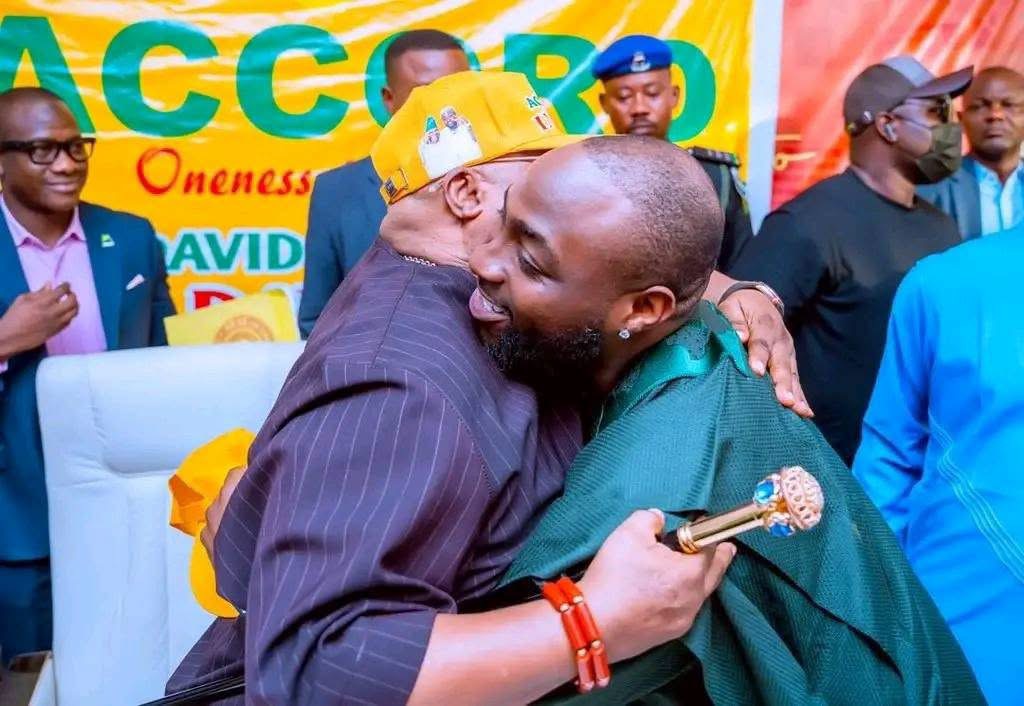
Imo State Governor Hope Uzodimma has responded to comments by Afrobeats star David Adeleke, popularly known as Davido, over the forthcoming Osun State governorship election, advising the singer to prepare to sign his uncle, Governor Ademola Adeleke, as a dancer after the poll.
Davido had, during a press conference on Wednesday, appealed to an unnamed politician from Imo State to allow a free and fair election in Osun. He said he had heard rumours of plans to interfere in the August 15 governorship poll and urged the politician to promote peace so that the people of Osun could freely elect their preferred candidate. Although the singer did not name Uzodimma, the remarks were widely interpreted as directed at the Imo governor.
Reacting in a statement issued on Thursday by his Senior Special Assistant on Electronic and Creative Media, Ambrose Nwaogwugwu, Uzodimma said Davido should direct his appeal to Osun voters rather than to him.
The governor predicted defeat for Ademola Adeleke, who is seeking re-election, claiming the electorate had lost confidence in his administration.
“The reality is that Governor Ademola Adeleke has, in the opinion of many, failed woefully in the discharge of his responsibilities. This is why many Osun voters are determined to vote him out in the August 15, 2026, governorship election,” the statement said.
“The signals emerging from across Osun State are clear. There is a growing indication that a significant number of voters have rejected the current administration and are prepared to embrace a new direction.”
Uzodimma further advised Davido to begin preparing his uncle for life after office instead of making emotional appeals.
“Rather than attempting to influence Governor Hope Uzodimma through emotional appeals, Davido should concentrate on helping his uncle prepare for life after office, as the people of Osun appear ready to cast their votes massively in favour of the APC candidate,” the statement added.
In a pointed remark aimed at both the singer and his uncle, the governor said: “Perhaps, Davido should also begin making preparations to officially sign his uncle as a dancer in his musical band, because judging by the mood of the electorate, he may well be out of a political job after the August 15, 2026, governorship election.”
The exchange comes days ahead of the August 15 governorship election in Osun State, where Governor Ademola Adeleke is seeking a second term.
NEWS
Benue Deputy Governor Defends Distributing ‘Alia Bread,’ Action Bitters To Idoma Community, Says Gesture Was Token of Appreciation
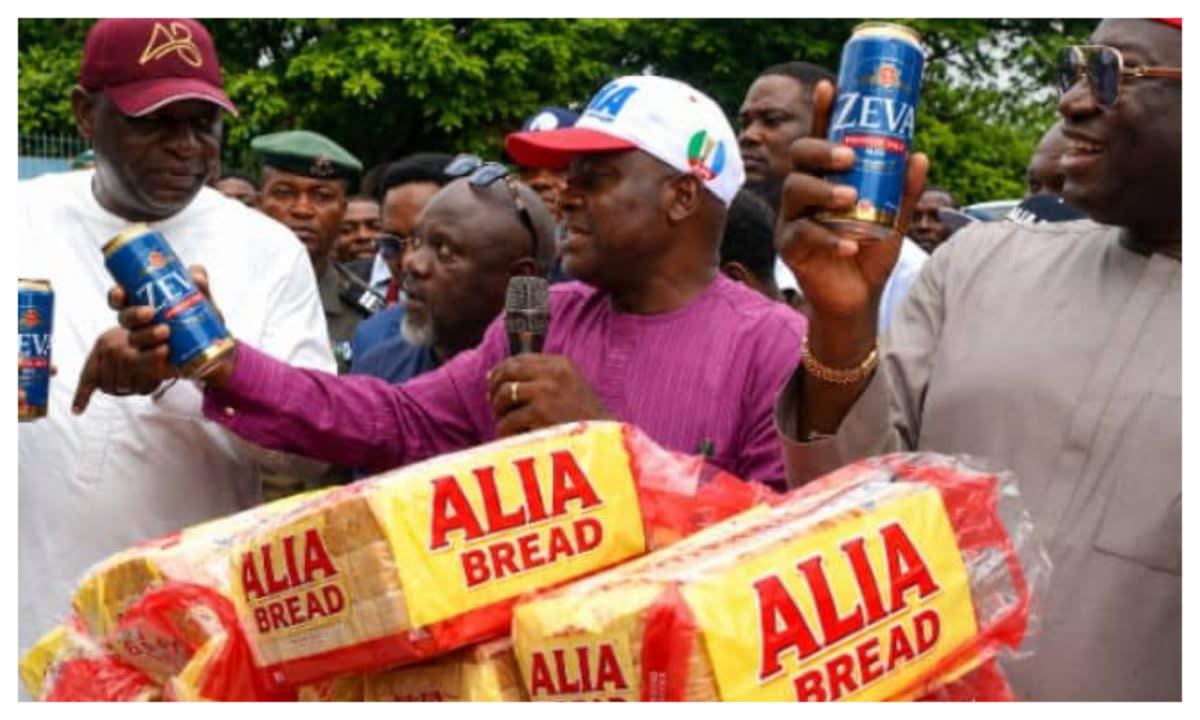
Benue State Deputy Governor, Sam Ode, has defended his distribution of bread, popularly referred to as “Alia Bread,” and Action Bitters to members of the Idoma community, describing the gesture as a token of appreciation rather than a political stunt.
Ode spoke during a visit to the Living Faith Church in Otukpo, where he dismissed the controversy surrounding the distribution and urged critics to focus on issues affecting the welfare and security of the people.
According to the Deputy Governor, the bread was shared as a traditional gesture of goodwill to residents who came out to welcome him during his recent visit to Igumale.
“The controversy over whether I gave bread to the people is not an issue,” Ode said.
“When we were young, whenever our parents travelled or visitors came, what we looked forward to receiving was bread. It was a token which I took to the people who came to receive me. They were happy. They were dancing.”
Ode disclosed that he also distributed money to members of the crowd on the directive of Governor Hyacinth Alia.
“I gave them something else like money, which the Governor said I should give to them,” he added.
The Deputy Governor maintained that the gesture should not have generated public debate, adding that the government remained focused on addressing the challenges confronting the people.
“And so there is no controversy over that. At least it’s better than giving them wee wee,” he remarked.
Ode urged critics to concentrate on issues with direct implications for residents rather than what he described as mundane distractions.
“We want to talk about issues, not those mundane things. What is important is that we are embracing the challenges of the people. We are listening to them and we are trying to address those issues, those things that are of concern to them, because they voted us into office for their welfare and security, and that we are committed to do,” he said.
The Deputy Governor explained that his visit to the area was primarily to carry out Governor Alia’s directive to inspect the Igumale Cement Factory and Benue Burnt Bricks.
He said the inspection formed part of the state government’s efforts to revive the moribund industries, stimulate economic activities and create employment opportunities for residents.
-
 OPINION1 year ago
10 seconds with Wike, reshaped my mindset on the difference between wants and needs – Udensi Bernard
-
 NEWS1 year ago
EFCC Detains Former Governor Tambuwal Over Alleged ₦189bn Fraud
-
 NEWS1 year ago
Gov. Mbah Increases Corps Members’ Allowance to ₦20,000
-
 NEWS1 year ago
Rep. Unyime Idem Unveils ₦1bn Family Business Grant for Constituents
-
 POLITICS1 year ago
Dr. Okezie Ikpeazu: A Voice That Still Inspires – Enyinnaya Appolos
-
 NEWS1 year ago
Appeal Court Orders FRSC to Pay ₦10 Million in Landmark Human Rights Case
-
NEWS1 year ago
Ikonne to Otti: Fear God, Show Us 51 Schools for ₦54bn, Stop Forcing ₦36k Revenue on Aba Traders
-
NEWS1 year ago
Prince Paul Ikonne Applauds Governor Uzodinma’s Support for Aba State, Criticizes Governor Otti’s Stance