
NEWS
S’Court dismisses Ighodalo’s appeal, affirms Okpebholo Edo gov


The Supreme Court of Nigeria on Thursday affirmed Senator Monday Okpebholo as the Governor of Edo State, dismissing the appeal filed by the Peoples Democratic Party’s governorship candidate, Asue Ighodalo.
A 5-member panel of the apex court in the lead judgment delivered by Justice Lawal Garba, held that the appellants failed to prove their case of over-voting, non-compliance with the Electoral Act, among other infractions which they cited as grounds to fault the electoral victory of Okpebholo.
In a unanimous judgment, the apex court held that with the submission before it, Ighodalo was not duly elected by the majority of lawful votes cast.
Specifically, the apex court held that the PDP candidate failed to prove non-compliance as he merely challenged the outcome of the election in 395 of the 4,519 polling units where elections were held.
The apex court panel also said the 19 witnesses called at the Tribunal stage did not help the case of the PDP in challenging the outcome of the election.
The apex court held that it found no reason to set aside the previous judgment of the lower courts, stating that the appellant failed to prove, without doubt, admissible evidence to the claim that the election was marred by irregularities and over-voting and proceeded to dismiss Igodhalo’s appeal.
PUNCH Online reported that the Court of Appeal, Abuja Division, on May 29, 2025, affirmed the decision of the Edo State governorship Election Petition tribunal that affirmed the election victory of Governor Okpebholo.
The three-member panel of the Appellate court in a unanimous decision dismissed Ighodalo’s appeal, describing it as devoid of merit.
Meanwhile, on April 2, 2025, a three-member panel of the Edo State governorship Election Petition Tribunal, chaired by Justice Wilfred Kpochi, in a unanimous decision, dismissed the petition of the PDP and Ighodalo for their inability to prove the allegation of over-voting as stated in their petition to challenge Okpebholo’s victory.
The tribunal faulted the way and manner in which the petitioners proved their evidence in relation to the allegations brought before it and affirmed that Okpebholo scored the highest number of valid votes in the election.
The petitioners in a petition marked EPT/ED/GOV/02/2024 alleged that Okpebholo did not score the highest number of votes in the election, adding that the election was marred by multiple irregularities and corrupt practices.
The petitioners alleged a high record of over-voting in the election and prayed the tribunal to nullify the election over non-serialisation of ballots, incorrect collation of figures, and erroneous computation of scores in 765 polling units.
The petitioners also argued that the election was marred by non-compliance with the Electoral Act.
It was equally the contention of the petitioners that INEC failed to serialise and pre-record some of the sensitive materials that were deployed for the poll, a situation they said aided the rigging of the election in favour of the APC and its candidate.
In the course of the trial, the petitioners called 19 witnesses to defend their claim that the election was marred with irregularities and should be nullified, while INEC, the 1st respondent, did not call any witnesses.
The petitioners subpoenaed a Senior Technical Officer from INEC’s ICT Department, who tendered 154 BVAS machines from 133 polling units to the tribunal to support their allegations of over-voting.
Okpebholo, the 2nd respondent in the petition, called a lone witness, while the APC, the third respondent, called four witnesses before closing its defence.
While the petitioners urged the tribunal to nullify the election as they had presented sufficient evidence to prove their allegations, the respondents, on their part, prayed the tribunal to dismiss the petition on the grounds that the contentions of the petitioners were without merit.
They claimed the petitioners failed to prove beyond a reasonable doubt their claims that Ighodalo, not Okpebholo, won the election.
The tribunal, in its judgment, led by Justice Kpochi, held that the petitioners did not convince the court in linking the allegations to the evidence tendered.
The tribunal held that it is clear that the documents, which include the voters register, the BVAS machine, and form EC8a, were required to prove the allegations of overvoting, but the petitioners failed to demonstrate it.
The tribunal also said most of the witnesses who testified for the petitioners gave hearsay evidence.
“We hold that the failure by the petitioners to call polling unit agents presiding officers or other registered voters was fatal to the case.
“It still remains the law that documents do not speak for themselves. A petitioner must prove their evidence. The allegation of non-compliance must be proved.
“It is not for us to sit back and look at it. Among the other plentitude of documents dumped on us, we still require evidence that shows that there was an extra recording of votes.
“The BVAS machine was clearly dumped and remains dormant. None of the witnesses could speak to the BVAS machine. The machines were not demonstrated to prove the allegations of overvoting.
“All the evidence documents tendered by the petitioners to prove overvoting fall short of the requirements.
“The law requires that the petitioners shall call witnesses to link the evidence rendered,” the tribunal held.
Justice Kpochi also said when an election is conducted in flagrant disobedience to the orders of the electoral Act, such an election is said to be conducted not in compliance with the electoral Act but the petitioners failed to prove that the Independent National Electoral Commission did not comply with the provisions of the electoral Act in the conduct of the elections.
“The petitioners failed to prove that the first defendant did not comply with the provisions of the electoral act or INEC rules of conduct as required by law”, Justice Kpochi stated.
The tribunal also held that, as against the petitioners’ claims by their witnesses, there are serial numbers on the ballot papers. “There are figures here,” Justice Kpochi said.
The tribunal dismissed the allegation that there was no prior recording of the electoral material before the commencement of voting and dismissed the petitioners’ petition.
In the Edo state governorship poll, INEC declared that Okpebholo polled 291,667, emerging the winner, while Ighodalo and PDP polled 247,655 votes in second position.
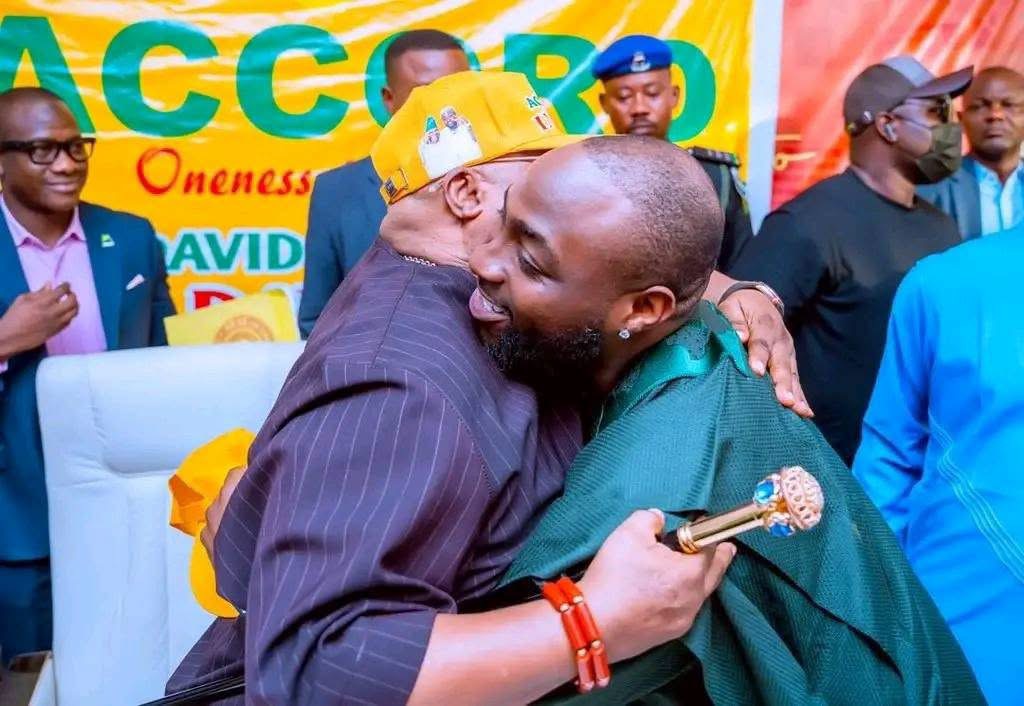
Imo State Governor Hope Uzodimma has responded to comments by Afrobeats star David Adeleke, popularly known as Davido, over the forthcoming Osun State governorship election, advising the singer to prepare to sign his uncle, Governor Ademola Adeleke, as a dancer after the poll.
Davido had, during a press conference on Wednesday, appealed to an unnamed politician from Imo State to allow a free and fair election in Osun. He said he had heard rumours of plans to interfere in the August 15 governorship poll and urged the politician to promote peace so that the people of Osun could freely elect their preferred candidate. Although the singer did not name Uzodimma, the remarks were widely interpreted as directed at the Imo governor.
Reacting in a statement issued on Thursday by his Senior Special Assistant on Electronic and Creative Media, Ambrose Nwaogwugwu, Uzodimma said Davido should direct his appeal to Osun voters rather than to him.
The governor predicted defeat for Ademola Adeleke, who is seeking re-election, claiming the electorate had lost confidence in his administration.
“The reality is that Governor Ademola Adeleke has, in the opinion of many, failed woefully in the discharge of his responsibilities. This is why many Osun voters are determined to vote him out in the August 15, 2026, governorship election,” the statement said.
“The signals emerging from across Osun State are clear. There is a growing indication that a significant number of voters have rejected the current administration and are prepared to embrace a new direction.”
Uzodimma further advised Davido to begin preparing his uncle for life after office instead of making emotional appeals.
“Rather than attempting to influence Governor Hope Uzodimma through emotional appeals, Davido should concentrate on helping his uncle prepare for life after office, as the people of Osun appear ready to cast their votes massively in favour of the APC candidate,” the statement added.
In a pointed remark aimed at both the singer and his uncle, the governor said: “Perhaps, Davido should also begin making preparations to officially sign his uncle as a dancer in his musical band, because judging by the mood of the electorate, he may well be out of a political job after the August 15, 2026, governorship election.”
The exchange comes days ahead of the August 15 governorship election in Osun State, where Governor Ademola Adeleke is seeking a second term.
NEWS
Benue Deputy Governor Defends Distributing ‘Alia Bread,’ Action Bitters To Idoma Community, Says Gesture Was Token of Appreciation
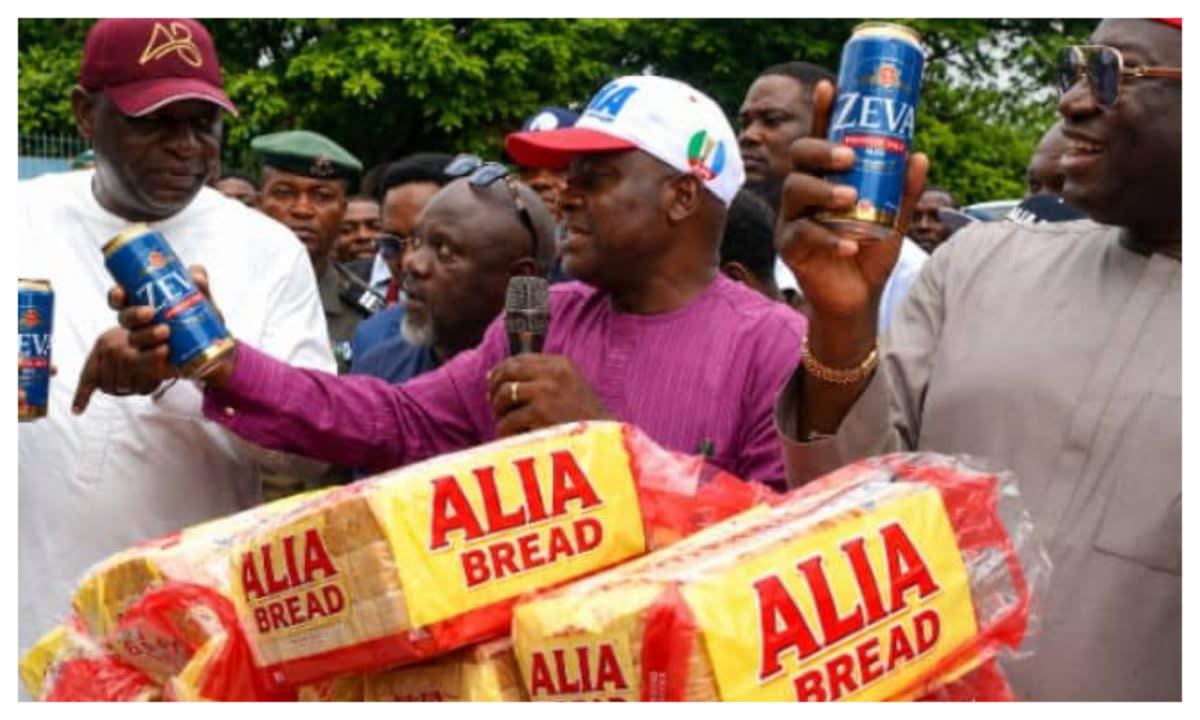
Benue State Deputy Governor, Sam Ode, has defended his distribution of bread, popularly referred to as “Alia Bread,” and Action Bitters to members of the Idoma community, describing the gesture as a token of appreciation rather than a political stunt.
Ode spoke during a visit to the Living Faith Church in Otukpo, where he dismissed the controversy surrounding the distribution and urged critics to focus on issues affecting the welfare and security of the people.
According to the Deputy Governor, the bread was shared as a traditional gesture of goodwill to residents who came out to welcome him during his recent visit to Igumale.
“The controversy over whether I gave bread to the people is not an issue,” Ode said.
“When we were young, whenever our parents travelled or visitors came, what we looked forward to receiving was bread. It was a token which I took to the people who came to receive me. They were happy. They were dancing.”
Ode disclosed that he also distributed money to members of the crowd on the directive of Governor Hyacinth Alia.
“I gave them something else like money, which the Governor said I should give to them,” he added.
The Deputy Governor maintained that the gesture should not have generated public debate, adding that the government remained focused on addressing the challenges confronting the people.
“And so there is no controversy over that. At least it’s better than giving them wee wee,” he remarked.
Ode urged critics to concentrate on issues with direct implications for residents rather than what he described as mundane distractions.
“We want to talk about issues, not those mundane things. What is important is that we are embracing the challenges of the people. We are listening to them and we are trying to address those issues, those things that are of concern to them, because they voted us into office for their welfare and security, and that we are committed to do,” he said.
The Deputy Governor explained that his visit to the area was primarily to carry out Governor Alia’s directive to inspect the Igumale Cement Factory and Benue Burnt Bricks.
He said the inspection formed part of the state government’s efforts to revive the moribund industries, stimulate economic activities and create employment opportunities for residents.
NEWS
The moment I picked up Guber form, all the oppressed, every woman in Abia stood up and knew their messiah is here – Doris Ogala

Nollywood actress and African Action Congress (AAC) governorship candidate Doris Ogala has described herself as the “messiah” sent to rescue oppressed Abia women and residents, insisting that her emergence as governor in 2027 is already assured by God.
In a recent interview, Ogala challenged critics who dismiss her as “just a content creator” and “not serious,” asking why they appear afraid of her if their “hands are clean.”
“The fear of Doris Ogala is the beginning of wisdom. If your hands are clean, you have nothing to fear,” she said. “I hear people say ‘she is just a content creator,’ ‘she is not serious,’ so why are you afraid?”
Ogala claimed that the moment she obtained her nomination form, “all the oppressed, every Abia woman stood up and knew their messiah is here to rescue them.” She linked the reported panic among opponents to divine intervention that cannot be stopped.
“That is why you see everywhere helter-skelter; they are running up and down because they can’t stop God’s work. And come 2027, I will be the best governor,” she declared.
She painted a picture of widespread hardship under the current administration, stating that Abians are “tired and crying because we have oppressors leading us” and that many people are too scared to speak out.
Ogala alleged that shops were demolished in an exercise she claimed was orchestrated by the deputy governor. She said she gave affected persons ₦200 each. She further asserted that the poverty rate in Abia is higher than the national average.
On claims that Governor Alex Otti had cleared workers’ arrears, Ogala said she discovered upon returning to the state that the announcement was a “decoy.” According to her, the affected people told her they had been deceived and remain unpaid.
Ogala, who emerged as the AAC candidate earlier this year, is expected to challenge the incumbent Labour Party governor and other candidates in the 2027 election.
-
 OPINION12 months ago
10 seconds with Wike, reshaped my mindset on the difference between wants and needs – Udensi Bernard
-
 NEWS1 year ago
EFCC Detains Former Governor Tambuwal Over Alleged ₦189bn Fraud
-
 NEWS1 year ago
Gov. Mbah Increases Corps Members’ Allowance to ₦20,000
-
 NEWS12 months ago
Rep. Unyime Idem Unveils ₦1bn Family Business Grant for Constituents
-
 POLITICS1 year ago
Dr. Okezie Ikpeazu: A Voice That Still Inspires – Enyinnaya Appolos
-
 NEWS1 year ago
Appeal Court Orders FRSC to Pay ₦10 Million in Landmark Human Rights Case
-
 NEWS12 months ago
Ikonne to Otti: Fear God, Show Us 51 Schools for ₦54bn, Stop Forcing ₦36k Revenue on Aba Traders
-
NEWS1 year ago
Prince Paul Ikonne Applauds Governor Uzodinma’s Support for Aba State, Criticizes Governor Otti’s Stance