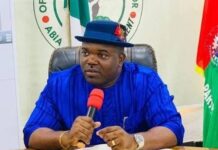
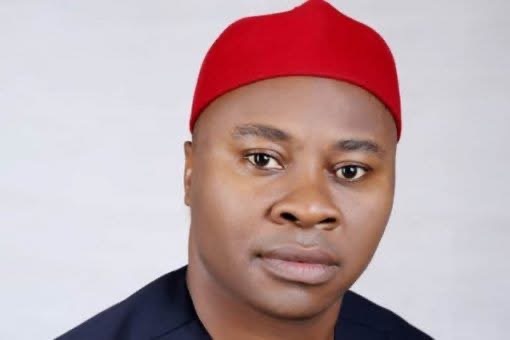
A chieftain of the All Progressives Congress (APC) in Abia State, Prince Paul Ikonne, says the endorsement of President Bola Ahmed Tinubu by APC stakeholders in the South-East marks a historic political realignment of the region with the centre of national power.
Ikonne, a former Executive Secretary and Chief Executive Officer of the National Agricultural Land Development Authority (NALDA), described the endorsement as strategic and unprecedented, noting that it reflects a collective decision by South-East leaders to play a more active role in national governance.
He spoke during a Television Continental (TVC) programme titled “APC South East Stakeholders Endorse President Tinubu for a Second Term.”
According to Ikonne, the endorsement demonstrates renewed political consciousness in the region and confidence in the reforms being implemented under President Tinubu’s Renewed Hope Agenda, including economic restructuring, infrastructure development and efforts at national unity.
He commended the Governor of Imo State and Chairman of the South-East Governors’ Forum, Senator Hope Uzodinma, alongside other APC governors from the region, for providing what he described as strategic leadership and coordination in repositioning the South-East politically.
Ikonne attributed the APC’s poor showing in the South-East during the 2023 presidential election to inadequate voter sensitisation and the fragmented alignment of political leaders across different parties at the time. He said the situation has since changed, with most influential political figures in the region now aligned with the APC.
He expressed confidence that the party would record overwhelming electoral success in the region in 2027, projecting that the APC could secure more than 90 per cent of the votes, given what he described as growing awareness of federal policies and their impact in the South-East.
Ikonne said the APC in the region now boasts sitting and former governors, lawmakers, captains of industry and experienced grassroots politicians, arguing that strong party structure and numerical strength would naturally translate into electoral victories.
Commenting on political developments in Abia State, Ikonne dismissed the likelihood of a repeat of the “Obi wave” experienced during the 2023 elections, insisting that governance performance, rather than sentiment or social media influence, would shape future outcomes.
He noted that Abia State now receives more than three times its previous federal allocations, attributing the increase to President Tinubu’s economic reforms, particularly the removal of fuel subsidy. He urged the state government to channel the increased revenues into tangible development projects.
Ikonne raised concerns over projects such as the Smart Schools initiative and recreational centres, alleging that large sums had reportedly been spent without visible results. He argued that many of the gains being celebrated in the state were indirect benefits of federal reforms rather than state-level initiatives.
On transportation, he compared Abia State’s acquisition of 20 electric buses with Enugu State’s deployment of over 200 compressed natural gas (CNG) buses, noting that both projects were made possible by increased state revenues following subsidy removal. He questioned what he described as the celebration of modest achievements despite the availability of significantly higher funds to state governments.
Ikonne also criticised Abia State Governor Alex Otti, accusing him of political inconsistency and alleging that he had distanced himself from Peter Obi, whose popularity he rode to office. He described speculations about Otti’s possible defection to the APC as a sign of political uncertainty, adding that the APC in Abia would regard the governor as a liability.
Despite this, Ikonne welcomed recent efforts by leaders within the Abia APC to reconcile and work together, describing the move as timely and necessary for strengthening the party ahead of future elections.
Reflecting on his tenure at NALDA, Ikonne said the agency faced significant challenges when he assumed office, including inadequate infrastructure, staffing shortages and limited funding. He said the management team stabilised and repositioned the authority within two years, establishing functional institutes in nearly all states of the federation.
He concluded that the South-East’s endorsement of President Tinubu represents a decisive step towards political relevance, stressing that unity and engagement at the centre of power are essential for sustainable development.