NEWS
Nnamdi Kanu’s Wife Dismisses Divorce Reports

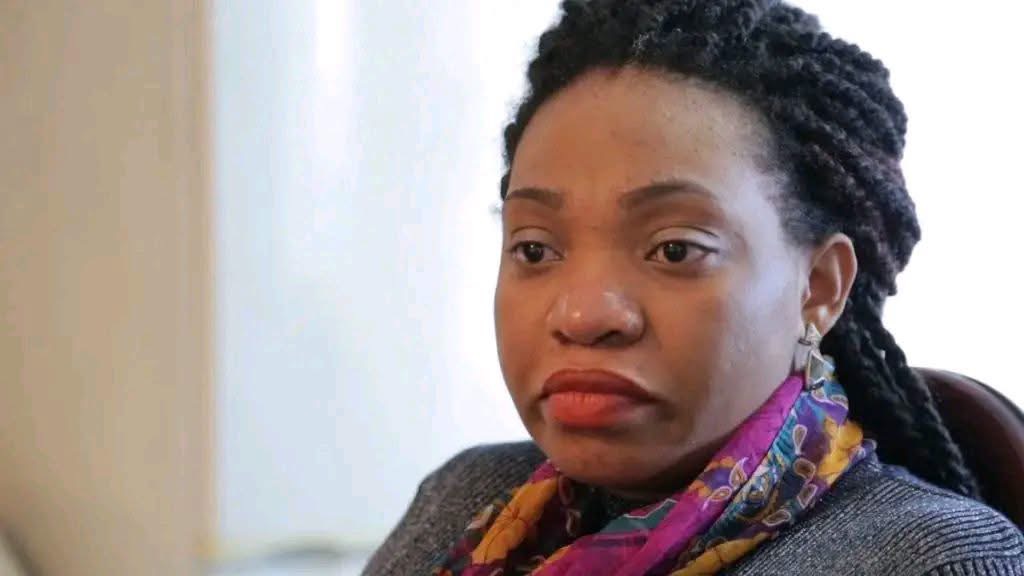
Uchechi Kanu, wife of the detained leader of the Indigenous People of Biafra (IPOB), Nnamdi Kanu, has dismissed reports claiming she filed for divorce from her husband.
Reacting to the reports in a post on her verified X account, Uchechi mocked the claims, saying she had just learned that she had supposedly initiated divorce proceedings while her husband remains in custody.
“Good conscious evening, my blessed Biafrans. I have just learned that I filed for Divorce while my husband is in prison,” she wrote, accompanied by laughing emojis.
The reaction followed media reports alleging that Uchechi had filed for divorce after years of alleged infidelity, financial neglect and interference from Kanu’s family members. The reports also claimed that the couple’s marriage had broken down irretrievably.
The reports further alleged that Kanu, whom Uchechi married in 2009, engaged in multiple extramarital affairs and was previously involved with a woman identified as Chioma Amaryllis Ahaghotu before his arrest in 2015.
However, Uchechi’s public reaction did not address the specific allegations beyond dismissing the claim that she had filed for divorce.
Nnamdi Kanu remains in custody following his conviction on terrorism-related charges linked to his agitation for the secession of Biafra.

Akwa Ibom State Government has outlawed the use of ambulances to transport corpses for burial, describing the practice as a public health threat.
Only hearses may now convey bodies for interment, according to the Commissioner for Health, Ekem John.
John made the disclosure on Thursday during the monthly media briefing organised by the Ministry of Information. He was flanked by the Commissioner for Information, Aniekan Umanah, and the Chief Press Secretary to the Governor, Ekerete Udoh.
The commissioner described the measure as one of the most significant reforms in the state’s health sector. He said Governor Umo Eno had institutionalised the Akwa Ibom State Emergency Medical Service Ambulance System, elevating it from policy to a statutory agency.
“Through this law, the state government has now criminalised and outlawed the use of ambulances to carry corpses,” John stated. “In the last one year and six months, under the reforms of His Excellency, Governor Umo Eno, we have returned our ambulance operations to the level found in the Western world.
“You will not find any government ambulance at any burial site. The law is very clear: whether it is a privately owned ambulance, mission ambulance or government ambulance, you cannot carry corpses. Corpses are carried by hearses, and when you use our ambulance to carry corpses, you are creating a public health threat to the rest of the public.”
He warned that any ambulance found transporting a corpse would be impounded, regardless of ownership. “The law now empowers government officials to impound the ambulance. So, let people know that when they go to hire an ambulance for their burial, those ambulances can be intercepted on the road.”
John also revealed that about nine bills had been forwarded to the State House of Assembly for consideration. The proposed legislation covers hospital governance, public health security, HIV prevention, protection and anti-discrimination, and public health standards regulation.
Once the health standards regulatory bill becomes law, he said, the relevant agency would set minimum acceptable standards for all health facilities in the state, requiring hospitals to meet specified obligations before they could operate.
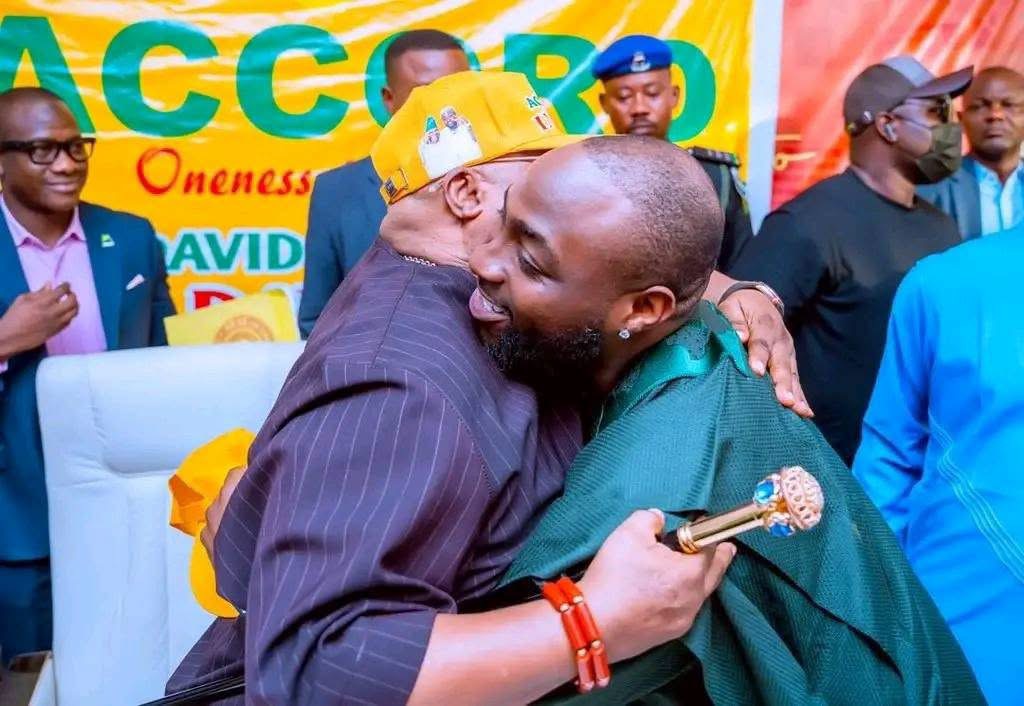
Imo State Governor Hope Uzodimma has responded to comments by Afrobeats star David Adeleke, popularly known as Davido, over the forthcoming Osun State governorship election, advising the singer to prepare to sign his uncle, Governor Ademola Adeleke, as a dancer after the poll.
Davido had, during a press conference on Wednesday, appealed to an unnamed politician from Imo State to allow a free and fair election in Osun. He said he had heard rumours of plans to interfere in the August 15 governorship poll and urged the politician to promote peace so that the people of Osun could freely elect their preferred candidate. Although the singer did not name Uzodimma, the remarks were widely interpreted as directed at the Imo governor.
Reacting in a statement issued on Thursday by his Senior Special Assistant on Electronic and Creative Media, Ambrose Nwaogwugwu, Uzodimma said Davido should direct his appeal to Osun voters rather than to him.
The governor predicted defeat for Ademola Adeleke, who is seeking re-election, claiming the electorate had lost confidence in his administration.
“The reality is that Governor Ademola Adeleke has, in the opinion of many, failed woefully in the discharge of his responsibilities. This is why many Osun voters are determined to vote him out in the August 15, 2026, governorship election,” the statement said.
“The signals emerging from across Osun State are clear. There is a growing indication that a significant number of voters have rejected the current administration and are prepared to embrace a new direction.”
Uzodimma further advised Davido to begin preparing his uncle for life after office instead of making emotional appeals.
“Rather than attempting to influence Governor Hope Uzodimma through emotional appeals, Davido should concentrate on helping his uncle prepare for life after office, as the people of Osun appear ready to cast their votes massively in favour of the APC candidate,” the statement added.
In a pointed remark aimed at both the singer and his uncle, the governor said: “Perhaps, Davido should also begin making preparations to officially sign his uncle as a dancer in his musical band, because judging by the mood of the electorate, he may well be out of a political job after the August 15, 2026, governorship election.”
The exchange comes days ahead of the August 15 governorship election in Osun State, where Governor Ademola Adeleke is seeking a second term.
NEWS
Benue Deputy Governor Defends Distributing ‘Alia Bread,’ Action Bitters To Idoma Community, Says Gesture Was Token of Appreciation
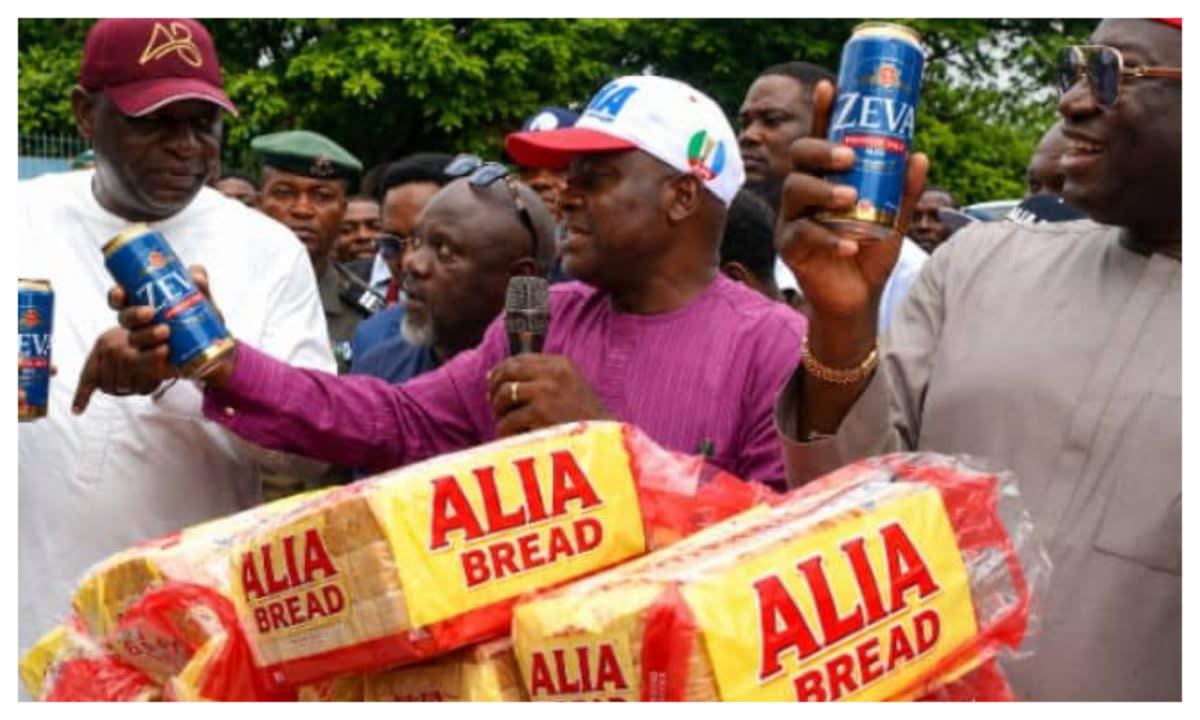
Benue State Deputy Governor, Sam Ode, has defended his distribution of bread, popularly referred to as “Alia Bread,” and Action Bitters to members of the Idoma community, describing the gesture as a token of appreciation rather than a political stunt.
Ode spoke during a visit to the Living Faith Church in Otukpo, where he dismissed the controversy surrounding the distribution and urged critics to focus on issues affecting the welfare and security of the people.
According to the Deputy Governor, the bread was shared as a traditional gesture of goodwill to residents who came out to welcome him during his recent visit to Igumale.
“The controversy over whether I gave bread to the people is not an issue,” Ode said.
“When we were young, whenever our parents travelled or visitors came, what we looked forward to receiving was bread. It was a token which I took to the people who came to receive me. They were happy. They were dancing.”
Ode disclosed that he also distributed money to members of the crowd on the directive of Governor Hyacinth Alia.
“I gave them something else like money, which the Governor said I should give to them,” he added.
The Deputy Governor maintained that the gesture should not have generated public debate, adding that the government remained focused on addressing the challenges confronting the people.
“And so there is no controversy over that. At least it’s better than giving them wee wee,” he remarked.
Ode urged critics to concentrate on issues with direct implications for residents rather than what he described as mundane distractions.
“We want to talk about issues, not those mundane things. What is important is that we are embracing the challenges of the people. We are listening to them and we are trying to address those issues, those things that are of concern to them, because they voted us into office for their welfare and security, and that we are committed to do,” he said.
The Deputy Governor explained that his visit to the area was primarily to carry out Governor Alia’s directive to inspect the Igumale Cement Factory and Benue Burnt Bricks.
He said the inspection formed part of the state government’s efforts to revive the moribund industries, stimulate economic activities and create employment opportunities for residents.
-
 OPINION12 months ago
10 seconds with Wike, reshaped my mindset on the difference between wants and needs – Udensi Bernard
-
 NEWS1 year ago
EFCC Detains Former Governor Tambuwal Over Alleged ₦189bn Fraud
-
 NEWS1 year ago
Gov. Mbah Increases Corps Members’ Allowance to ₦20,000
-
 NEWS12 months ago
Rep. Unyime Idem Unveils ₦1bn Family Business Grant for Constituents
-
 POLITICS1 year ago
Dr. Okezie Ikpeazu: A Voice That Still Inspires – Enyinnaya Appolos
-
 NEWS1 year ago
Appeal Court Orders FRSC to Pay ₦10 Million in Landmark Human Rights Case
-
 NEWS1 year ago
Ikonne to Otti: Fear God, Show Us 51 Schools for ₦54bn, Stop Forcing ₦36k Revenue on Aba Traders
-
NEWS1 year ago
Prince Paul Ikonne Applauds Governor Uzodinma’s Support for Aba State, Criticizes Governor Otti’s Stance