
NEWS
Truth Beyond Sentiment: Tinubu’s Fiscal Revolution, Ben Kalu’s Courage, and the Mirage of Otti’s Performance

By Elder Abraham Amah
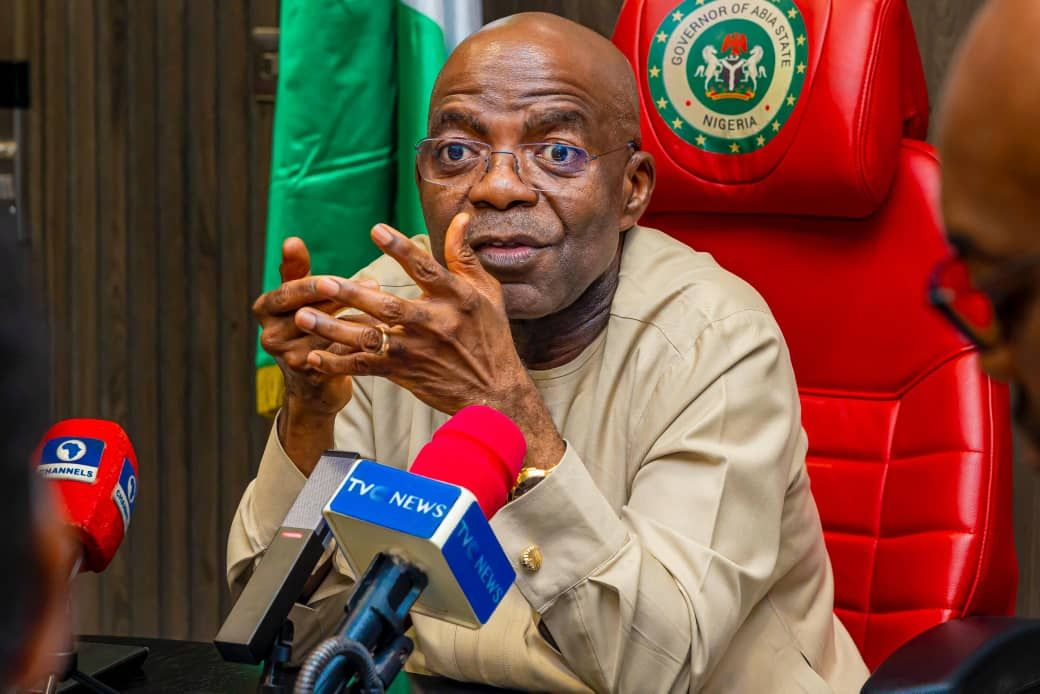
On Friday, October 3, 2025, Abia State was filled with anticipation. President Bola Ahmed Tinubu was scheduled to visit on the invitation of Governor Alex Otti to commission what the state government had described as landmark projects. The invitation was not just ceremonial; it was meant to serve as a symbolic endorsement of a government eager to display its achievements, and a federal administration willing to celebrate the results of its bold economic reforms. It was an opportunity for both leaders to showcase the dividends of a historic fiscal shift—particularly the removal of the controversial fuel subsidy, which had for decades drained the nation’s wealth and crippled infrastructural growth.
But the expected drama never unfolded. The President did not arrive. Even the Vice President was not delegated to represent him. Instead, the Minister of Works, Engr. Dave Umahi, stood in on behalf of the President. That singular act of substitution altered the entire political temperature of the state and provoked a flurry of interpretations. To some, it was a slight—an unspoken message that the federal center was unimpressed with Otti’s projects. To others, it was a mere scheduling adjustment. Yet to those who understand the subtleties of power and symbolism, it was a profound message: performance must be verifiable before it can be celebrated.
In the theater of governance, presence confers legitimacy, while absence questions authenticity. When a President commissions a project, he lends it the weight of national approval. When he chooses not to, he is making a statement—that the work must first pass the test of substance. Tinubu’s decision not to appear was therefore not an act of hostility but of principle. It was a quiet reaffirmation of a new order where governance must be measurable, results must be tangible, and accountability must replace political theatre.
President Tinubu has built his administration on a philosophy of earned recognition. Since assuming office, he has dismantled the most sacred cow in Nigeria’s economic history: the petroleum subsidy. For decades, that single policy served as a vast canal of corruption, draining over ₦12 trillion between 2011 and 2022 and leaving little room for meaningful development. Tinubu’s courage in ending the subsidy not only stopped the hemorrhage—it liberated the federation account and gave the states a new lease of life.
Today, the figures speak louder than propaganda. Under the previous administration of Governor Okezie Ikpeazu, Abia’s highest FAAC allocation in 2023 was about ₦4 billion, roughly $5 million at the time. In 2025, under Governor Alex Otti, that figure now stands at ₦35 billion—around $25 million. This represents a staggering 500 percent increase in dollar terms and over 600 percent in naira value. No state in Nigeria can claim that such astronomical growth came from local ingenuity alone. It was the direct result of Tinubu’s fiscal revolution—his audacity to end subsidy theft, expand the tax net, harmonize foreign exchange, and enforce accountability.
Representative Ben Kalu, the Deputy Speaker of the House of Representatives and an Abia son, dared to articulate this truth. He pointed out that the Otti administration’s supposed transformation was inseparable from the increased federal inflows generated by Tinubu’s reforms. For that act of honesty, he was attacked. The Otti media team accused him of jealousy and political ambition, even attempting to trivialize the argument by comparing his parliamentary impress allowance with the FAAC allocation to Abia. It was a shallow and desperate deflection.
Ben Kalu did not malign Otti. He merely drew a line of truth between cause and effect. Without Tinubu’s reforms, no governor would have had this kind of fiscal room to maneuver. His statement was not political; it was patriotic. But truth in Nigeria is often punished before it is understood. The attacks on Kalu reveal how far our politics has sunk into sentimentality, where facts are treated as offenses and gratitude as weakness.
The irony is that Otti could have embraced the truth with grace. Acknowledging Tinubu’s reforms as a catalyst for Abia’s progress would have demonstrated humility and strategic wisdom. Instead, his reaction was defensive, revealing a thin skin for criticism. If the President’s absence embarrassed the state, the reaction of the governor’s media team embarrassed reason itself. Rather than confront the question—what has Abia truly done with the unprecedented inflows?—they resorted to scapegoating those who dared to ask.
Let us be clear: the performance of the Otti administration must be measured not by press conferences but by proportionality. A sixfold increase in allocation must translate into a sixfold improvement in living conditions. That is the moral and economic logic of leadership. With ₦35 billion flowing monthly into the state treasury, Abia should by now be pulsating with construction energy. Roads, hospitals, schools, and industrial clusters should be springing up with transformative speed. Yet, most of what we see are cosmetic facelifts in urban centers, while rural communities remain neglected. The disparity between the rhetoric of renewal and the reality of impact is becoming impossible to hide.
The President’s decision to send his Minister instead of appearing in person, therefore, carried philosophical weight. It was a refusal to endorse unverified accomplishments. Tinubu’s administration has set a standard: performance must be visible, measurable, and sustainable before it earns presidential attention. To have flown to Abia to commission ordinary road patches or re-painted roundabouts would have diluted the very principle he is trying to institutionalize—governance by results, not by ritual.
In truth, Abia is not without federal attention. There are major federal projects ongoing under Tinubu’s government: the rehabilitation of the Aba-Port Harcourt Expressway, the expansion of the Umuahia-Ikot Ekpene Road, multi-billion-naira TETFund interventions at Abia Polytechnic, the newly approved Federal University in Abia, and the active South-East Development Commission chaired by Chief Emeka Wogu, another illustrious Abia son. To claim that the Tinubu administration has ignored Abia is both unfair and ungrateful.
The economic philosophy behind Tinubu’s reforms is transformative. By dismantling the subsidy regime and broadening the national tax net, he has returned fiscal power to the states. He has dismantled the old culture of excuses where governors cried “no money” while squandering little resources on recurrent bills. Today, the states are empowered—and exposed. Tinubu has democratized abundance and, in doing so, placed the burden of accountability squarely on the shoulders of every governor.
What this means is simple: a new era of economic morality has dawned. The governors now have the resources; the people must now demand the results. In Abia, that question is legitimate and urgent. If ₦35 billion is coming in every month, then the people deserve evidence of proportionate transformation. They deserve not mere roads, but industries; not slogans, but systems.
Ben Kalu’s intervention must be understood in this context. He was not scoring political points but calling attention to the truth that Tinubu’s reforms have given Abia a new chance. As Deputy Speaker, he is constitutionally obligated to defend national policy integrity. He reminded Abians that the prosperity they now boast of is a fruit of federal courage, not local populism. For that, he deserves commendation, not condemnation.
The broader philosophical truth is that Tinubu’s presidency has redefined the relationship between the center and the states. He has given them the tools of prosperity and withdrawn the alibi of poverty. He has shifted the moral balance of Nigerian federalism. Those who build wisely on this foundation will rise as models of progress; those who waste it in propaganda will be exposed by time.
Otti’s administration has a choice—to build on this new foundation with humility and partnership or to squander it in arrogance and defensiveness. The President’s absence was not an insult but an invitation—to self-reflect, to improve, and to deliver results that can command federal presence without begging for it. In governance, as in life, recognition is earned, not requested.
The people of Abia must now begin to separate motion from movement, noise from progress, propaganda from performance. A state that once cried for help now receives enough to transform its destiny. Whether that destiny is realized will depend not on Abuja but on Umuahia.
History will not remember who invited the President or who was attacked on social media. It will remember who told the truth when it was dangerous to do so. Ben Kalu has done that. Tinubu has done that. And Abia must learn from that.
The lesson is simple yet eternal: gratitude is the beginning of progress. Acknowledging those whose courage paved the way for prosperity is not weakness—it is wisdom. President Bola Ahmed Tinubu has rewritten the fiscal story of Nigeria. He has freed the states from financial bondage. It is now up to the governors to prove that freedom can produce fruit.
When the President eventually visits Abia, it should be to celebrate transformation that is undeniable, not to endorse illusions. Until then, the message of his absence remains clear: governance is not performance until the people can feel it.
As Scripture declares, “You shall know the truth, and the truth shall make you free.” The truth has been spoken. Ben Kalu said it. Tinubu enacted it. Abia must now live it.
Elder Abraham Amah
Columnist, Political Philosopher, and Public Affairs Analyst
NEWS
Nigerians Asked Me to ‘Slow Down’ After Improved Electricity Supply, Freezers Are Freezing — Power Minister
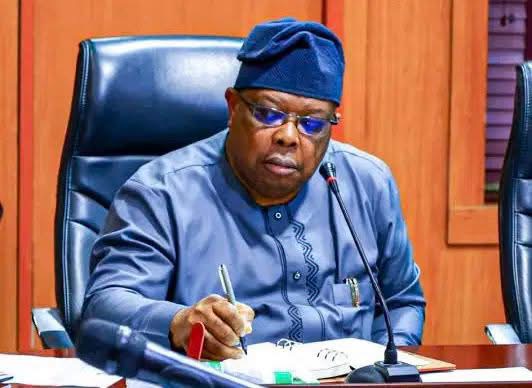
Minister of Power, Joseph Tegbe, says some electricity consumers have asked him to “slow down” improvements in power supply because their freezers are now working continuously.
Tegbe made the remark on Wednesday in Abuja while speaking at the commissioning of a 3-megawatt solar hybrid power project at Yakubu Gowon University, formerly the University of Abuja.
According to the Minister, some areas that previously experienced prolonged power outages are now receiving up to 18 hours of electricity daily.
He said some consumers had contacted him to complain that the improved supply was causing their freezers to operate continuously.
“Places that didn’t have light at all for three months are now having 18 hours light. Some areas called me to say, look, I should slow down, that everything in their freezer is freezing. That is what freezer is meant to do. Let it freeze the food that needs to be frozen,” Tegbe said.
The Minister recalled that during his Senate screening, he had promised Nigerians that noticeable improvements in electricity supply would begin within three to six months.
He, however, acknowledged the challenges confronting the sector, noting that some electricity infrastructure across the country is more than 40 years old.
Tegbe said the Federal Government was systematically replacing obsolete infrastructure and introducing new facilities to improve the reliability of electricity supply.
He also expressed concern over the vandalism of critical power infrastructure, revealing that three major transmission towers in Birnin Kebbi had been brought down by vandals.
According to him, the affected towers formed part of the infrastructure supplying electricity to Kebbi State and extending to Niger Republic.
He said the vandals attacked the foundations of the towers before bringing them down and cutting parts of the structures for sale in the scrap market.
Tegbe disclosed that the Federal Government had established a joint working committee involving the Economic and Financial Crimes Commission, EFCC, the Nigeria Police and the Nigeria Security and Civil Defence Corps, NSCDC, to monitor and protect national electricity assets.
“You will not believe how many towers get pulled down by vandals,” he said.
He added that efforts were underway to ensure vandalism of critical electricity infrastructure is treated as a serious criminal offence.
Yakubu Gowon University Solar Project
Speaking on the university project, Tegbe said the facility comprises a 3.3-megawatt solar array, 3MW AC output capacity and battery storage to supply electricity to critical facilities within the institution.
He said the project would power lecture halls, laboratories, ICT facilities, administrative buildings, campus lighting and other essential services.
According to him, more than 58,726 students are expected to benefit from the project, which includes 6,078 photovoltaic panels and 388 streetlights installed across the university.
The Minister said the project also created 3,201 jobs during its implementation.
He explained that the battery storage capacity could be expanded to provide electricity to additional parts of the university, including student hostels.
Tegbe said the Rural Electrification Agency, REA, would collaborate with the university to address areas of the campus that still require improved lighting.
He also urged the institution to use the facility to promote research into renewable energy, battery storage, smart metering, energy management, grid integration, cybersecurity and other areas of modern energy technology.
The Managing Director of the REA, Abba Abubakar Aliyu, described the project as a significant milestone under the Energizing Education Programme.
Aliyu said the programme should not be assessed solely by the amount of electricity generated, but also by its impact on students, academic activities, research and the overall learning environment.
He said reliable electricity would improve laboratory operations, strengthen digital services and reduce pressure on university operating budgets.
The Head of the Nigeria Electrification Project, Olufemi Akinyelure, said the wider development opportunities created by reliable electricity should also be considered in assessing the project.
He said investment in education remained important because powering universities goes beyond lighting buildings to supporting learning, innovation and national development.
Also speaking, Chairman of the Senate Committee on Power, Senator Enyinnaya Abaribe, commended the Federal Government and the Minister for implementing the Energizing Education Programme.
Abaribe said reliable electricity was fundamental to the development of Nigeria’s education system, recalling that power supply in universities was more dependable during his time as a student.
He, however, stressed that communities must play an active role in protecting public infrastructure to ensure its sustainability.
Earlier, the Vice-Chancellor of Yakubu Gowon University, Professor Hakeem Fawehinmi, said dependable electricity was essential to the institution’s academic mission.
Fawehinmi said a modern university could not effectively conduct teaching, research, laboratory activities and digital services without reliable power supply.
He thanked the Federal Government and the REA for the intervention, describing the solar hybrid project as a major infrastructure investment in the university.
The Vice-Chancellor also called for continued collaboration between government agencies and the university to ensure the facility remains operational and delivers its intended benefits to students and staff.
The Obidient Movement on Wednesday demanded clarification from the Independent National Electoral Commission on the whereabouts and official engagements of its Chairman, Prof. Joash Amupitan, after National Commissioner Prof. Rhoda Gumus appeared as Acting Chairman at an official engagement with an African Union delegation in Abuja.
The movement, in a statement signed by its National Coordinator, Dr Yunusa Tanko, said the development had raised questions about Amupitan’s whereabouts and the circumstances surrounding his absence from the commission’s headquarters.
The development followed an INEC post on X on Tuesday, September 15, which identified Gumus as the Acting Chairman of the commission while receiving an AU Pre-Election and Needs Assessment Mission to Nigeria.
The AU delegation, led by former Ethiopian Foreign Minister, Demeke Mekonnen, visited INEC headquarters in Abuja as part of its assessment of Nigeria’s preparations for the 2027 general elections.
Gumus is a serving National Commissioner of INEC and is listed on the commission’s official website among its national commissioners.
However, Tanko said the movement was concerned that there had been no public communication, to its knowledge, explaining when or why Amupitan handed over his duties to Gumus.
He said, “As far as the Obidient Movement and Nigerians are concerned, there was no official communication of Professor Amupitan’s handover to anyone, either in acting or substantive capacity.
“This raises legitimate questions about the Chairman’s current location, official schedule and the circumstances surrounding his absence.”
The group urged INEC to clarify where Amupitan was, when he left Abuja, the purpose of his absence and who authorised it.
It also asked the commission to disclose whether the chairman had travelled outside the country and, if so, the official engagements he had undertaken.
The movement further demanded clarification on whether Amupitan had met, or was scheduled to meet, President Bola Tinubu, the National Chairman of the All Progressives Congress or any representative of the ruling party.
Tanko said the questions were necessary because of INEC’s constitutional responsibility for conducting elections and the importance of public confidence in the commission’s leadership ahead of the 2027 polls.
“As Nigeria moves closer to the 2027 general elections, the INEC Chairman cannot operate in secrecy,” he said.
The movement national coordinator also questioned what it described as the chairman’s alleged “antecedents and strong affection for the APC,” urging INEC to demonstrate transparency and political neutrality in its operations.
He said, “The era of the INEC Chairman having strategy meetings with the APC and the ruling party must be a thing of the past.
“Nigerians do not trust this INEC Chairman or the Commission he leads, so it behoves him and the Commission to not only be transparent and non-partisan, but to also be seen as such.”
Tanko further said the electoral commission belonged to Nigerians and that its leadership should remain accountable to the public.
“It is important to reemphasise that the electoral commission belongs to the Nigerian people. Its leadership must therefore be accountable to the public and must not leave room for speculation about secret political engagements, especially given their many past antecedents and the crisis of confidence that the Commission continues to face,” he said.
The movement therefore called on INEC to publicly state Amupitan’s whereabouts and explain his official engagements.
The call comes as INEC intensifies preparations for the 2027 general elections.
Efforts to get the reaction of the commission were unsuccessful.
As of the time of filing this story, INEC Chief Press Secretary, Dayo Oketola, could not be reached on the phone to clarify the issue.

A 68-year-old British woman, Dawn Ottewell, has said she is struggling to locate her Nigerian husband, Bright Emokpae, 31, whom she married in 2022.
Ottewell, from Dewsbury, West Yorkshire, told the UK-based newspaper, The Sun, that she wanted to divorce Emokpae, whom she accused of leaving their home and blocking her on social media.
As reported by The Sun on Monday, the couple, who have a 37-year age difference, met on dating apps in 2021 before marrying at a registry office in Nicosia, Cyprus, on March 22, 2022.
Ottewell said Emokpae initially told her that he was a professional in his 30s named Brian Thomas, but later disclosed that he was a fashion student in his mid-20s from Benin City, Nigeria.
She said she forgave him and eventually travelled to Cyprus in March 2022, where they met in person for the first time and got married.
“I know I was a fool, but I was in love,” Ottewell said.
“I was so lonely and depressed during the pandemic. I was out-of-work with several health issues. I was on Universal Credit and living with my daughter Kirsty, 33, who had a 14-month-old baby, but we were arguing all the time.
“When I met Bright, he made me feel special and alive.”
According to Ottewell, Emokpae later moved to Britain after obtaining a spouse visa, but their relationship deteriorated.
She alleged that he became distant and made frequent financial demands, including sending money to Nigeria.
“I got all-new furniture, and he didn’t put a penny towards it. When we went out for dinner, it was usually me picking up the bill,” she said.
The Sun reported that Emokpae denied the allegation, saying he contributed £400 towards his £900 flight from Nigeria and paid the council tax and water bills at their shared home.
The couple separated in October 2023 but reunited six months later after Ottewell received a £63,000 payout following a medical negligence claim related to a prolapse operation at an NHS hospital, according to The Sun.
Ottewell said she later regretted reconciling with him, alleging that he was interested in her money.
The relationship subsequently deteriorated again, and she said Emokpae left shortly before Christmas 2024 after finding messages she had exchanged with other men on dating apps.
Ottewell said she had not spoken to him since he blocked her on social media about eight months before The Sun’s report was published.
“He’s done a runner and is refusing to sign the divorce papers because I believe he wants to cling on to his spouse visa,” she said.
She also alleged that Emokpae could be living in Scotland, where she claimed he had started an online clothing business.
“I’m convinced he was never in love with me and just wanted a visa to move to England,” Ottewell said.
“And it’s because of his cherished spouse visa that he won’t agree to a divorce.”
Ottewell said she was receiving assistance from Citizens Advice as she tried to locate him and serve him with divorce papers.
“I just want him out of my life for good,” she said.
“I also want people to know that if this can happen to me, it can happen to anyone.”
When approached by The Sun, Emokpae said he had signed the divorce papers but declined to provide evidence to support his claim.
-
 OPINION1 year ago
10 seconds with Wike, reshaped my mindset on the difference between wants and needs – Udensi Bernard
-
 NEWS1 year ago
EFCC Detains Former Governor Tambuwal Over Alleged ₦189bn Fraud
-
 NEWS1 year ago
Gov. Mbah Increases Corps Members’ Allowance to ₦20,000
-
 NEWS1 year ago
Rep. Unyime Idem Unveils ₦1bn Family Business Grant for Constituents
-
 POLITICS1 year ago
Dr. Okezie Ikpeazu: A Voice That Still Inspires – Enyinnaya Appolos
-
 NEWS1 year ago
Appeal Court Orders FRSC to Pay ₦10 Million in Landmark Human Rights Case
-
 NEWS1 year ago
Ikonne to Otti: Fear God, Show Us 51 Schools for ₦54bn, Stop Forcing ₦36k Revenue on Aba Traders
-
NEWS1 year ago
Prince Paul Ikonne Applauds Governor Uzodinma’s Support for Aba State, Criticizes Governor Otti’s Stance