
POLITICS
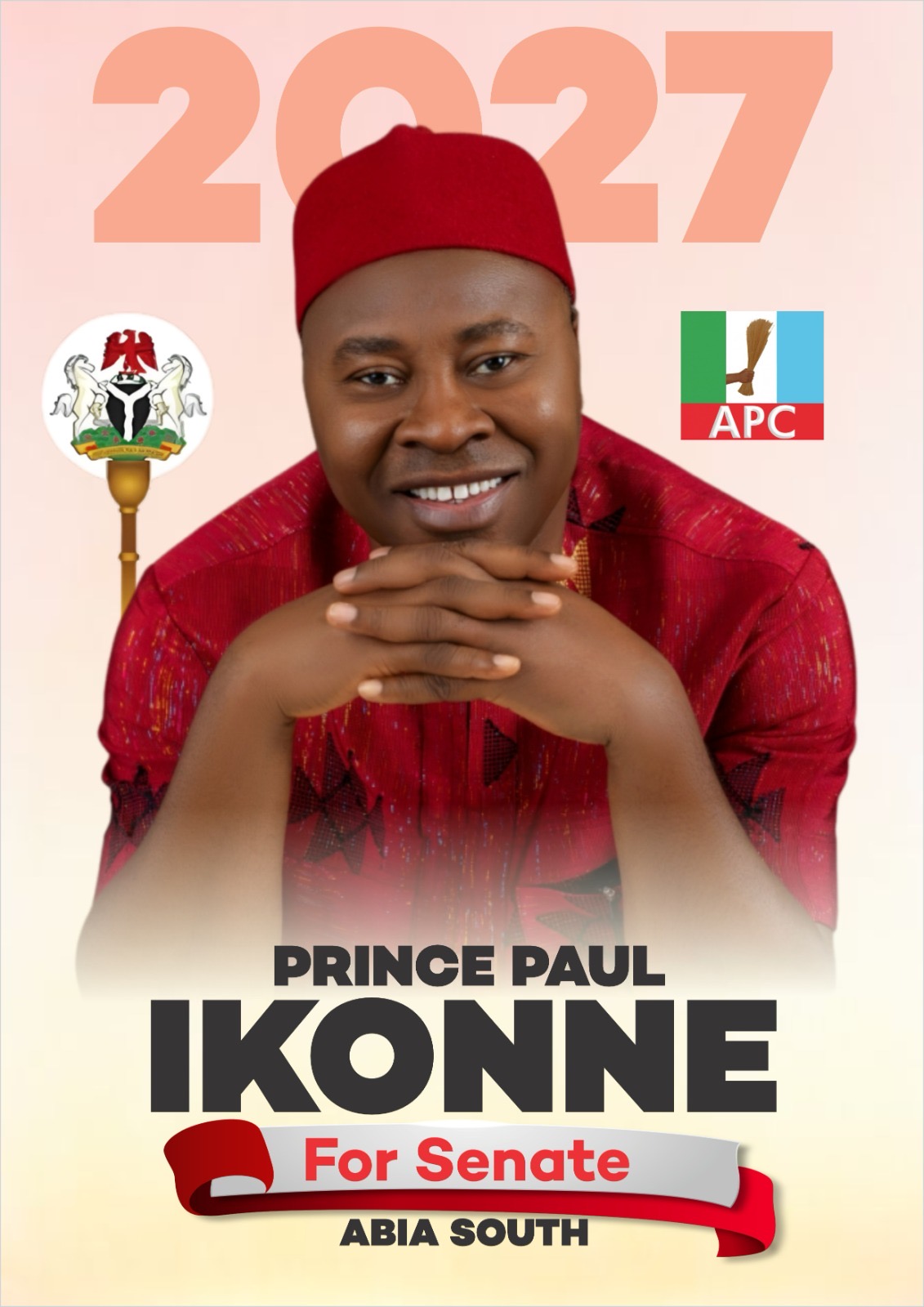
ABIA SOUTH: WHY IKONNE IS BEST BET

By Chiagoziem Enoch
As the political temperature gradually rises ahead of the next senatorial elections, the conversation in Abia South is no longer just about party lines or rhetoric, it is increasingly about capacity, equity, and proven impact. In this evolving debate, one name continues to resonate across communities, markets, and political circles: Prince Paul Ikonne.
Abia South Senatorial District, comprising six local government areas and three federal constituencies, has over the years maintained a delicate political balance rooted in equity and inclusion. The Ukwa bloc has had its turn. The Obiomangwa axis has also held the seat for over 16 years. By every fair and moral standard, attention is now shifting to Aba to produce the next senator. In this context, Prince Paul Ikonne emerges not just as a contender, but as the most compelling choice; an indigenous Aba son whose candidacy aligns naturally with the principles of justice and rotation.
Beyond equity, however, lies the more critical question of what a candidate brings to the table. On this score, Ikonne stands tall. Widely regarded as one of the highest employers of labour in the zone, his private and public engagements have directly and indirectly created opportunities for countless families.
His track record in public service further strengthens his case. During his tenure at the National Agricultural Land Development Authority (NALDA), Ikonne played a pivotal role in attracting federal attention to Abia South. Notably, the establishment of the NALDA Institute of Agricultural Entrepreneurship in the zone stands as a forward-thinking initiative designed to equip young people with practical skills, promote agribusiness, and stimulate rural economies. This is in addition to road projects and other federal interventions that have helped improve connectivity and economic activity within the district.
What sets Ikonne apart is his unique blend of grassroots understanding and national reach. He is not distant from the people; he is rooted in their daily realities. From the bustling markets of Aba to the rural communities across the senatorial district, he understands the pressing needs of his umunne and umunna. At the same time, his experience at both state and federal levels gives him the leverage to attract development and influence policy.
Critics may argue, as they often do in politics, but elections are ultimately about choices grounded in evidence. And the evidence, in this case, points to a man who has consistently demonstrated commitment to development, both in and out of office. A man who has not only spoken about empowerment but has actively contributed to it. A man whose vision aligns with the aspirations of a people eager for progress.
As Abia South stands at another defining moment, the path forward requires more than sentiment. It demands leadership that is equitable, experienced, and impactful. Prince Paul Ikonne represents that convergence.
.
Prince Paul Ikonne is not just an option, he is the best bet.
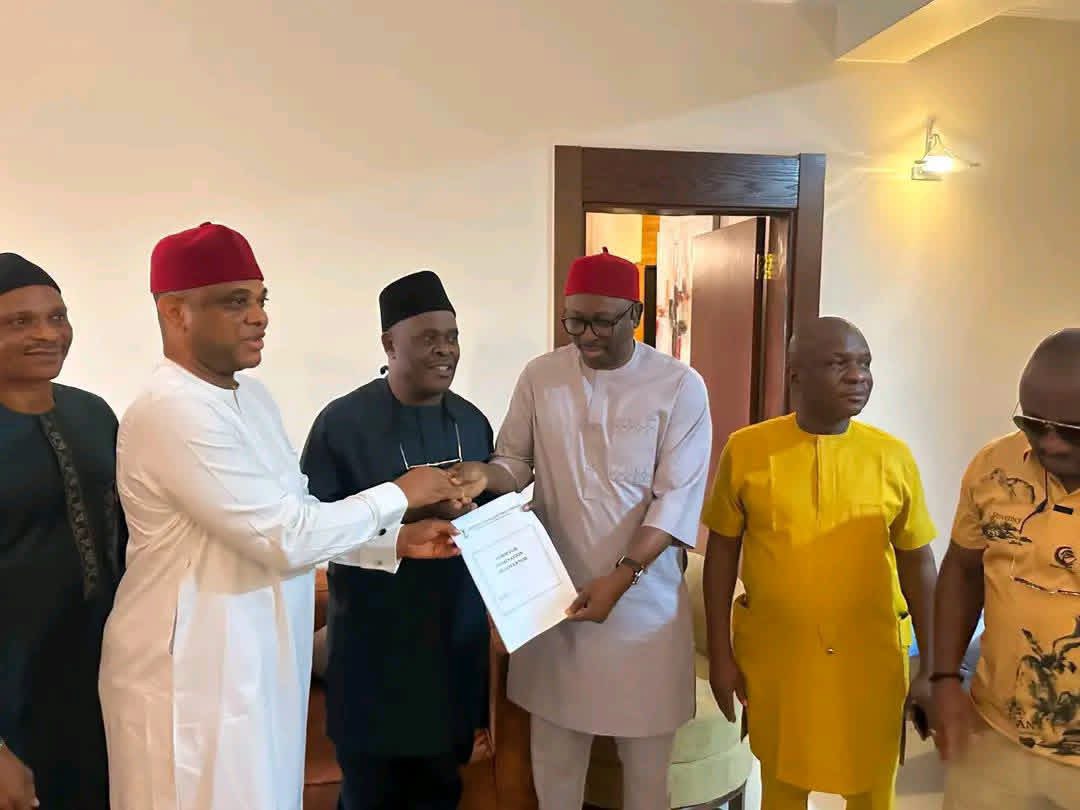
The All Progressives Congress (APC) in Abia State has put to rest speculation over its governorship ticket, with the state Chairman, Hon. Chijioke Chukwu, reaffirming Eric Opah as the party’s candidate for the 2027 general election.
Speaking in an exclusive interview with FLO 94.9 FM, Chukwu declared that all controversies surrounding the party’s primaries have been resolved, and the results announced by the primary election committee — and subsequently ratified by the APC National Working Committee — remain valid and binding.
“The results of the primaries as announced by the primary election committee and ratified by the National Working Committee stand,” Chukwu said. He stressed that Eric Opah is the authentic governorship candidate of the APC in Abia State.
The chairman called on all party members to bury their differences and close ranks in order to build a formidable APC ahead of the 2027 polls.
In the same interview, Chukwu also confirmed that Hon. Erondu Uchenna will be the party’s candidate for the Abia South Senatorial District seat in the upcoming elections.
The National Publicity Secretary of the African Democratic Congress, Bolaji Abdullahi, has alleged that Justice Peter Lifu acted in contempt of court by issuing a judgment that deregistered the ADC and four other political parties despite a pending appeal.
According to Abdullahi, the Court of Appeal had directed that no action should be taken on the matter until the appeal is heard on October 27. He argued that proceeding with the judgment before the appellate court’s determination amounts to a disregard for the court’s directive.
“Justice Peter Lifu, the judge who gave the judgment that deregistered the ADC and four other parties, should be arrested. The Appeal Court said don’t act until the case is heard on October 27. He’s acting in contempt of court,” Abdullahi stated.
The remarks add a new dimension to the legal and political controversy surrounding the status of the affected political parties, with the matter expected to be further addressed when the appeal comes up for hearing.
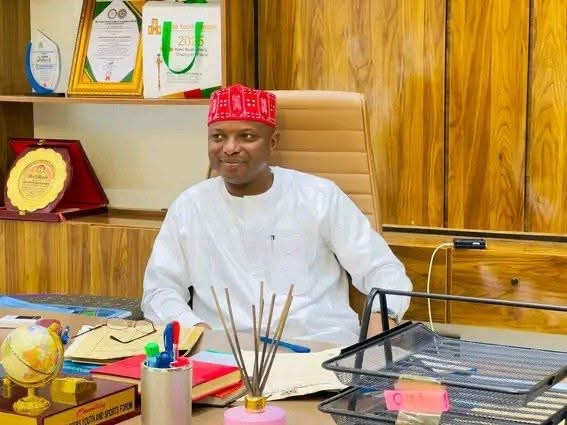
KANO — Mustapha Rabiu Kwankwaso has been announced as the deputy governorship candidate of the Nigeria Democratic Congress (NDC) in Kano State ahead of the 2027 general elections.
Mustapha is the son of Rabiu Musa Kwankwaso, a leading figure in the party and former governor of Kano State.
The announcement comes amid ongoing political realignments within the NDC in Kano. The party recently unveiled Aminu Abdussalam Gwarzo as its governorship candidate for the state, following consultations among party stakeholders.
Political observers say the emergence of Mustapha Kwankwaso as running mate is expected to generate discussions within Kano’s political landscape, given his family ties to the influential Kwankwasiyya movement led by his father.
The NDC has continued to position itself as a major opposition force ahead of the 2027 elections, with the party’s leadership expressing confidence in its chances across key states, including Kano.
Party officials are expected to provide further details on the candidature and campaign strategy in the coming days.
-
 OPINION1 year ago
10 seconds with Wike, reshaped my mindset on the difference between wants and needs – Udensi Bernard
-
 NEWS1 year ago
EFCC Detains Former Governor Tambuwal Over Alleged ₦189bn Fraud
-
 NEWS1 year ago
Gov. Mbah Increases Corps Members’ Allowance to ₦20,000
-
 NEWS1 year ago
Rep. Unyime Idem Unveils ₦1bn Family Business Grant for Constituents
-
 POLITICS1 year ago
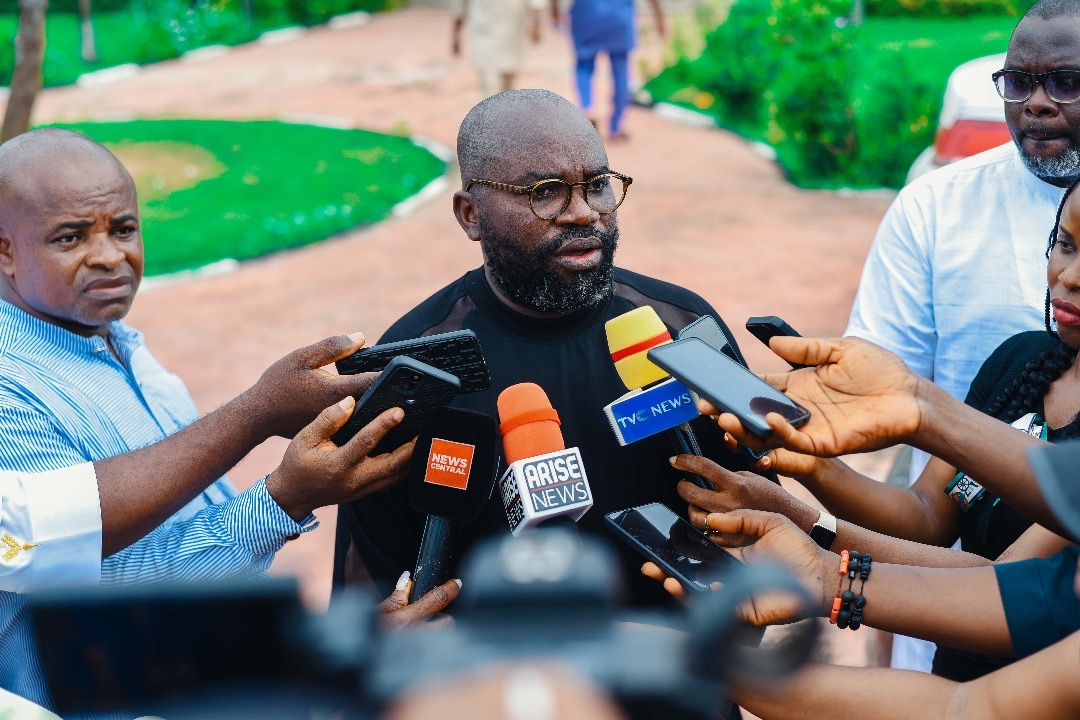
Dr. Okezie Ikpeazu: A Voice That Still Inspires – Enyinnaya Appolos
-
 NEWS1 year ago
Appeal Court Orders FRSC to Pay ₦10 Million in Landmark Human Rights Case
-
 NEWS1 year ago
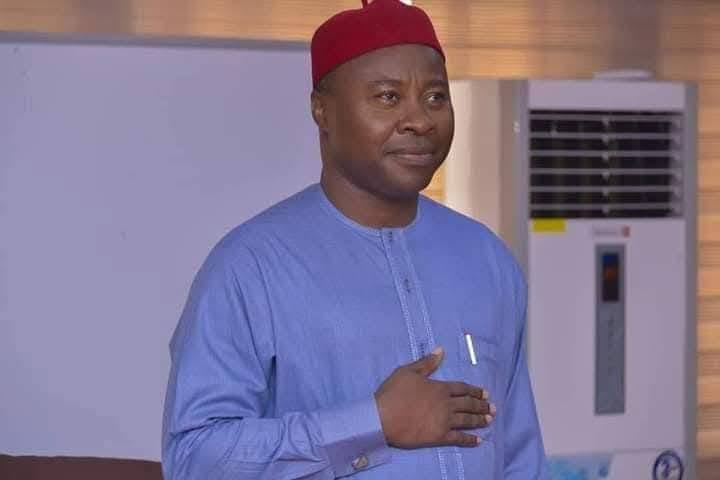
Ikonne to Otti: Fear God, Show Us 51 Schools for ₦54bn, Stop Forcing ₦36k Revenue on Aba Traders
-
NEWS1 year ago
Prince Paul Ikonne Applauds Governor Uzodinma’s Support for Aba State, Criticizes Governor Otti’s Stance